
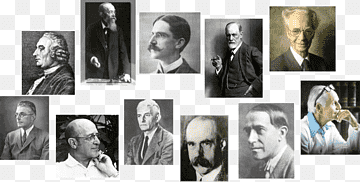
The field of social psychology has grown rapidly and is having an increased influence on how we think about human behavior.
The results of social psychologist research have created impacts on how people relate in professional field and has changed the face of human resource managements in companies. However the field has traveled a journey up to the point it today, just like all other field of study.
here are the outlines of the milestones in the development of social psychology as a field of study:
The earliest social psychology experiments on group behavior were conducted by Triplett in 1898. Triplet wrote what is now recognized as the first published study in the field of sport psychology. His experiment titled “social facilitation effect” where he observed that cyclists were riding faster when in company of other cyclists as opposed to when riding alone. He then repeated the same in a laboratory where he arranged 40 children to play a game that involved turning a small fishing reel as quickly as possible and observed that children that played the game in pairs turned the reel faster than those who were alone.
The first social psychology textbooks were published by McDougall titled An Introduction to Social Psychology in 1908. In an attempt to oppose behaviorism theory of psychology, McDougall argued that behavior was generally goal-oriented and purposive, an approach he called hormic psychology.
Hormic psychology serves as one of the foundational frameworks for understanding the wide range of human motivational forces.
During the 1940s and 1950s, the social psychologists by name Kurt Lewin and Leon Festinger refined the experimental approach to studying behavior, creating social psychology as a rigorous scientific discipline. Lewin initially developed many of the important ideas of the subject including a focus on the dynamic interactions among people. Festinger edited an influencial book called Research methods in the behavioral Sciences where together with other social psychologist, he emphasized on the need to measure variables and use laboratory experiments to systematically test research hypotheses about social behavior and also noted that it might be necessary to deceive participants about the true nature of the research in the experiments.
Social Psychology was energized by researchers who attempted to understand how the German dictator Adolf Hitler could have produced such extreme obedience and horrendous behaviors in his followers during the second world war. The studies on conformity by Muzafer in 1936 and Solomon Asch in 1952 and Stanley Milgram in 1974 showed the importance of conformity pressures in social groups and how people in authority could create obedience even to the extent of leading people to cause severe harm to others.
Muzafer Sherif and his wife psychologist Carolyn Wood Sherif, conducted a study focused on intergroup behavior in 1954. The experiment they called “The Robbers Cave experiment” showed that hostility can arise between two groups in conflict and competition for scarce resources. The control variables in the experiment were medals and prizes which were scare resource and two groups were competing against each other for those resources.
The Stanford prison experiment conducted by Philip Zimbardo etal in the 1960s and 1970s demonstrated the powerful role of the social situation on human behavior. Zimbardo in his well-known experiment titled “Prison experiment” found that ordinary male colleague students who were recruited to play the roles of guards and prisoners in a simulated prison became so involved in their assignments and their interactions became so violent such that the study had to be terminated prematurely. The study demonstrated the power of social setting.
John Darley and Bibb Latane developed a model that helped to explain when people may or may not help others in need in 1968. Darley is best known, in collaboration with Bibb Latané for developing theories with an aim to explain why people might not help at the scene of an emergency when they are in a crowd.This phenomenon is best referred to as the bystander effect and the accompanying diffusion of responsibility effect. Their study resulted from the tragic incident that involved somebody called Kitty Genovese, a New York resident who was murdered in March 1964 while 38 people were deemed to have either witnessed or heard her struggling with the assailant.

Leonard Berkowitz pioneered the study of human aggression in 1974. Leonard Berkowitz was an American social psychologist who lived between 11th August 1926 and 3rd January 2016 and was best known for his research on altruism and human aggression. He prostrated the cognitive neoassociation model of aggressive behavior to help explain instances of aggression which the frustration-aggression hypothesis was not able to explain.
Other social psychologists including Irving Janis(1972) focused on group behavior studying why intelligent people sometimes makes disastrous decisions when working together.
Irving Lester Janis was an American research psychologist at Yale University and a professor emeritus at the University of California, Berkeley who lived between 26th May 26 1918 and 15th November 1990.He is best known for his theory of group-think, which described the systematic errors made by groups when making collective decisions.
Other social psychologists like Gordon Allport and Muzafer Sherif focused on intergroup relationships with the aim of understanding and potentially reducing the occurrence of stereotyping , prejudice and discrimination.
Social psychologists gave their opinions in the 1954 V. Board of Education supreme court case that helped end racial segregation in public schools in the united states.
The later part of the 20th century saw an expansion of social psychology into fields of attitudes with particular emphasis on cognitive processes. during this time, social psychologists developed the first formal models of persuasion with the goal of understanding how advertisers and other people could present their message in an effective way. These approaches to attitudes focused on the cognitive processes that people use when evaluating messages and on the relationships between attitudes and behavior. Leon Festinger’s important cognitive dissonance theory was developed in 1957 and was the model for later research.
In 1970s and 1980s, social psychology became even more cognitive in orientation as social psychologists used advances in cognitive psychology which were themselves based largely on advances in computer technology. The focus of the researchers was on social cognition; an understanding of how our knowledge about our social worlds develops through experience and the influence of these knowledge structures on memory, information processing, attitudes and judgments. The extent to which human decision making could be flawed by both cognitive and motivational process was documented.
In the 21st century, the field of social psychology has been expanding into still other areas. Examples includes an interests in how social situations influences our health and happiness, the important roles of evolutionary experiences and cultures on our behavior and the field of social neuroscience(the study of how our social behavior both influences and is influenced by activities of our brain).
Social Psychology continues to evolve a century later after it’s conception. Psychologists will need to continue seeking new ways to measure and understand social behaviors . off course, social interactions and ways of live have been changing since then, and so people’s behavior in response to social interactions likely to be altered especially in the world currently dominated by technology.
Conclusion
Our behaviors are greatly influenced by others. Psychologists over the years noted how people affects each others thoughts and actions and notable phenomena like dictatorships and human conflicts triggered study of human behaviors in social contexts. Among the pioneers of social psychology included Triplet(1898) and McDougall(1908). Other important personalities in the development of social psychology includes Kurt Lewin, Leon Festinger, Muzafer sherif and Solomon Asch.
Leonard Berkowitz pioneered the study of human aggression. You could add your name there in the development of social psychology in the 21st century as well if you happens to develop an interest in the field in the course of our learning here.
Final words
We will be exploring more in this field and even dive deeper to explore more interesting topics in social psychology.
Your views are highly welcomed and we will use them to shape the future lesson.