Category: Psychology

  • Losing a job

    Losing a job

    What experiences in life helped you grow the most?

    losing my first job at 28 years was very devastating. i never saw it coming. I was happy and contented, and i never even realized that, what i was earning could not sustain me for three months if i stopped work. Before then, i was just working without caring about anything in the world. I just enjoyed what i was doing, having good time over the weekend and partying with friends whenever i was not working.

    Losing a job helped to learn a few things:

    • That your office colleagues are not your friends. They will do anything to get your position and opportunities.
    • That salary is not something that can make you relax in life. It is madness to expect that you will live quality life with salaries.
    • That social capital is very important
    • That your partying friends are just partying friends. They may not come through when you are down
    • Financial literacy is very important
    • Be diligent in your work but have extra things that can generate income
    • Invest money to have financial freedom
    • Be careful when choosing a career because it will determine everything else about your life.
    • Listen to your heart and examine your abilities and interests carefully before chasing a career in college
    • It is stupidity to go to college to learn something that will only make you fit for employment in a certain field
    • That there are women that are only attracted to you because of your job and they will go if the job goes

    After i collected myself, i explored my environment and started an IT accessories from scratch. I learn the ways of businessmen. I learnt how to look for clients, i learnt how to handle clients and where to get supplies. I learnt how to survive and live outside employment. I also discovered how limiting and restricting employment life can be. I enjoyed abundance that comes from making your own money without waiting for a pay check.

    I also started appreciating my former boss because i realized that being an employer requires diligence and can be headache. You have to keep thinking how to generate enough revenue to run business and pay all your current expenditures like salary

    It is after loosing my job that i learnt useful technical skills like making computer hardware, software development and system administration. I shunned white color jobs and appreciated hand on skills. I realized that the real wealth is on production and not on using your salary to be a consumer.

    I discovered power of saving and investing money on capital market. That is how i came out of the narrow life of staying in closed offices and went out and started growing socially, economically and politically and spiritually and discovered how little i had learnt from school. The real learning happens outside classrooms. I appreciated much the famous slogan from my grandpa;

    “growth is born from adversity”

    Related posts


  • Nonverbal Communication

    Nonverbal Communication

    This is the kind of communication where messages are passed without word being spoken or being written. However, nonverbal communication has a great impact on the receivers interpretation of any message.

    In summary

    Nonverbal communications occurs in various forms that includes:

    • Body movements
    • Paralanguage
    • personal presentation
    • Proxemics
    • sign languages

    Body movements

    It is also known as the body language. Our body can send communication to other people without us uttering as a single word. kinesics is the field of study that deals with the ways people use their bodies to communicate or supplement their verbal communications. body movements may includes:

    • posture
    • gestures
    • facial expressions
    • eye contacts
    Posture

    posture refers to how your body is positioned. Your body position can send important messages to people and communicate a great deal about you. For example leaning forward in a conversation shows you r greatly interested and you are giving attention to what is being spoken. Leaning backward could mean disinterest or boredom. if you are standing and you reach a wall or a post for support can signify you are tired and no energy for talking.

    Gesture

    This includes movement of hands, fingers, arms or winking of eyes. For example when talking with your arms open wide can signify honesty and openness while talking when fingers interlocked can be interpreted as nervousness.

    Facial Expressions

    This includes arrangement of facial muscles to send a message. Our facial muscles are flexible and so can be rearranged to portray a certain image for communication purposes. We can stretch or relax our mouth, cheeks, eyes,eyelids, forehead, nose or chin to communicate a known symbol. For instance a folded face can show displeasure or a stretched mouth showing disapproval. Our face is the first point of contact when we meet people and hence likely to be the most observed part of our body. Our facial expressions can be read to decode and interpret our emotional feelings, telling whether we are happy, excited, sad, neutral etc.

    eye contacts

    eye contacts can be used to communicate different messages, for example direct eye contacts can communicate interests, intimacy or confident. diverted or downcast eyes may show intimidation or submission. People can avoid eye contacts with you if they are afraid or feel guilty about something they have done against you.

    Para-language

    This is how we speak like how is our pitch,speed of talking, how loud are we and quality of our voice. When we are frightened,anxious or excited, the pitch our voice can rise but it is lower when we sound more powerful or authoritative.

    Volume

    Refers to relative softness or loudness of our voice. Some people talks with loud voice and others in low tones. There are people that feels intimidated by people talking too loudly and others find it hand to concentrate on a speech given in low tones. Volume can be determined by the communication environment. Like in noisy places, even people that talks with low voices could be speaking with high voice because they are trying to raise their voice above the voices in the environment while in quite place, you feel to be in more control and hence you lower your voice.

    Rate

    Rate in speech could be used to mean how many words are given per unit time. People who thinks very fast tends to talk very fast but people who process information slowly will find it difficult following a fast talker.

    Voice quality

    some people has better and pleasant voices than others. A voice could be harsh, calm, strident, soothing etc.

    personal presentation

    How we groom ourselves can determine how we will be perceived by our audience especially when meeting them for the first time. If we appear dressed nicely, it can show we are resourceful, respectable, reliable and organized. If we dress shabbily, it can show we takes things casually or we lack seriousness with our things.

    Grooming habits communicates a great deal about who we are and how we want to be perceived. People can decode different messages based on our hair length, makeups, cologne and perfumes, length of our nails and how we have have painted them, how shiny is our shoes etc

    Touching

    social psychologists argues that touching is the most intimate form of nonverbal communication. Touching means how we use our hands towards the other person

    Proxemics

    It is the study of how we use space. It is attributed to the work of Edward hall in his book, “The Hidden dimension”. Edward argues that, taking a case of two people in a conversation, our personal space can be broken into four zones that includes:

    • Intimate distance(0-18 inches
    • personal distance(18 inches-12 feet)
    • social distance(4 feet – 12 feet)
    • public distance(12 feet – 25 feet)
    Intimate distance

    It is a distance reserved for intimate activities including love making, intimate or confidential conversations, hugging, kissing and snuggling.

    Only our most intimate relationships are permitted in this distance from us and if an invited person invades this space,we usually moves away slightly to maintain the distance. When a stranger invades this distance, we feel threatened and we develop flight or fighting instincts causing us to increase distance between us and them or try to push them away when we are not able to move.

    Personal distance

    It is the distance reserved for conversations with family, friends and close acquaintances. It is a distance that we allow people we feel comfortable with.

    Social distance

    It is the distance we are most comfortable when interacting with people in a way that is not intimate. It is the distance we maintain when interacting with people on a day to day basis for example when transacting business, having meetings, eating in hotels, sitting in bank halls, when talking to police etc.

    public distance

    it is the distance used for public ceremonies, speeches, large group meetings and class lectures. If the distance is greater than 25 feet, communication is characterized with shouting and exaggerated nonverbal gestures. The distance our ears can comfortably receive messages passing through air is quite limited and is subject to distortion from noise and other physical hindrance like diversion and absorption by physical objects.

    sign language

    It involves the use of hands to make symbolic gestures which have specific meanings. Sign language is a skill and a field of study taught in colleges in order to help the people with hearing impairments communicate with the world

    Functions of non-verbal communication
    • Message reinforcement or supplementation of verbal messages
    • negation of verbal messages
    • substitution of verbal messages (when talking is not possible or not allowed)
    • message accentuation (putting emphasis)
    • message regulation (controlling a conversation)

    Importance of nonverbal communication

    • have almost an instant effect because of quicker grasp by the receiver. Speed in conveyance and response makes non-verbal communications very useful in situations like traffic control by police
    • aids verbal communication. By use of nonverbal symbols, a large amount of complex data can be presented in a compact form so that large message can be communicated with just few non-verbal cues.
    • Response to visual symbols and images is usually more powerful than spoken language.
    • It is the best method to communicate with illiterate people or people that don’t understand your language. For example illiterate drivers can understand road signs and directives with non-verbal traffic signals.
    • Helps the hearing impaired communicate, learn and be able to work.
    related posts

  • SELF

    SELF

    self

    self is composed of our thoughts and beliefs about ourselves. The concept of self is usually described as our knowledge about who we are.

    The self is the active processor of information about yourself.

    Self-awareness

    It is described as the act of thinking about ourselves. self can be characterized in personal and in social level.

    Personal level is thought of as the unique individual that describes somebody as who they are independent of other people. In personal level self is a collection of thoughts, perceptions, concepts and feelings that are dominant in an individual being.

    Social level describes somebody as who they are as member of a certain group.Social level of self describes how one is perceived in a crowd and how they see themselves as part of the group they belong.

    Self-insight

    This is the ability to judge oneself correctly and know your limitations and potentials. It is about how people perceive themselves in respect to their surroundings. Self-insight is what creates the concept of self-identity which is important in providing the basis of having a free will. It is what makes people makes their own decisions that are independent of group thinking. It makes people decides who they are and how they will live their lives. For Example, Jane who is a successful career woman and who has made her mark in the corporate world decides that she gonna be independent woman. She realizes that she value freedom than relationships, Her free will enables her to shun relationships to maintain her independence as a woman.

    It is the self-insight that makes you decides am good in math and so i better choose math related careers and avoid languages and humanities when i realize am not gifted in those areas.

    when we talk about self, we refers to awareness of one’s being and functioning. we also be referring to concept of me or I.

    self awareness is described with several dimensions such as own ideas, feelings and beliefs. Self awareness is about knowing things about self that are known to the public and those that are private to yourself.

    Self awareness refers to the physical, social and psychological perceptions about self and is usually derived from interaction with others. It also refers to ability in reflecting on one’s action, thoughts and emotions.

    self-concept

    It refers to individual’s belief about themselves including personal attributes, who they are and what defines them.

    Lewis (1990) argued that self-concept is a vital aspect for a person to understand who they are and proposed that the development of self-concept has two key aspects: The existential self and the categorical self.

    The existential self

    This is where a person realizes that they exists as a separate entity from others and that they continue to exists over time and space. According to Lewis, awareness of the existential self begins as young as two to three months old and continues to develop as the child interact with the world.

    This is “the most basic part of the self-scheme or self-concept; the sense of being separate and distinct from others and the awareness of the constancy of the self” (Bee, 1992).

    Categorical self

    After the child realizes that he or she exists as a separate being, the child becomes aware that he or she is an object in the world. The child becomes aware of his or her own properties as one of the objects in the world.The awareness in this level causes one to distinguish himself or herself in terms of age, gender , size, skin color, tribe, skills, level of education e.t.c.

    Later, self-description also begins to includes references to internal feelings, comparative evaluations and how others see them.

    Carl Rogers believes that the self concept has three different components:

    • Self-image -> the view you have for yourself
    • Self-esteem -> How much value you place on yourself (self-worth)
    • ideal self ->How you wish you were really like

    Related Pages

  • Research Methods in Psychology

    Research Methods in Psychology

    In summary

    • Case studies
    • observational studies
    • Psychological tests
    • surveys
    • correlational studies
    • Experiments

    Case studies

    A case study is a detailed description of a particular individual based on careful observations or formal psychological testing which may include but not limited to information about somebody’s childhood life, person’s dreams, fantasies, experiences, relationships etc.

    The case study method often involves simply observing what happens a single participants or a group of individuals by considering their history as well as current life.

    Academic researchers use case studies when they are just beginning to study a topic or when practical or ethical considerations prevents them from gathering information in other ways.

    Case studies illustrates psychological principles in a way that abstract generalization and processed statistics can never do and they produce a more detailed picture of an individual than any other method.

    Case study is not usually considered a research method but a tool for researchers to use to select methods of data collection and analysis that will generate insights in a study.

    The general techniques used in case studies includes:

    • unstructured interviews
    • participant observations
    • personal diaries
    • personal notes like letters, photographs and journals
    • official documents like clinical notes and appraisal reports

    Field studies and Naturalistic Observations

    Field studies involves making systematic observations of behavior as it occurs in natural settings where researchers observes, measures and record behavior taking care to avoid intruding on the people or animal being observed.

    Remember that, Hawthorne studies showed that people changes behavior when they learn that they are being observed and may hence provide the actual picture of who they are naturally are.

    Field studies can be less intrusive than surveys or experiments because researchers are not directly asking about someone’s perception but they merely record observations about a specific behavior.

    unlike case studies, observational studies usually involves many participants.

    Researchers can choose to record their notes as the behavior occurs or afterwards. In the later, there is less chance of forgetting the details but participants may consider this intrusive and alter the outcomes.

    If the researcher waits until after the behavior occurs, the risk of being intrusive is gone but some details maybe forgotten. There are some researchers that makes audio or video recordings of the behavior and analyze them later.

    The primary purpose of naturalistic observation is to find out how people or animals acts in their normal social environment

    Psychologists uses naturalistic observation wherever people happen to be at home, playgrounds, streets, classrooms, offices, drinking joints, social functions etc.

    Observers must strive to avoid being obvious about what they are doing so that their subjects in the study will behave naturally, otherwise they will alter their behavior in response to the feeling of being observed. Some may even move away from the scene.

    Observational studies should not be done haphazardly but should be done systematically will researchers having clear picture of what data they need to collect lest they distort the study with their biasness and record carefully for others to check on their findings.

    Participant observation is a form of field study where researchers also interact and play a role in the behavior as well as they record the social behavior.

    Sometimes psychologists prefer to make observations in a laboratory settings where they have more control of the situation as they can use sophisticated equipment, determine the number of people who will be observed and maintain focus on research problems.

    Psychological tests

    Psychological tests (assessment instruments) are procedures for measuring and evaluating personality traits, emotions, aptitudes, interests, abilities and values usually by requiring people to answer a series of written or oral questions. The answers to the questions are totalled to yield a single numerical score or a set of scores.

    There are usually two types of test that can be applied:

    Objective (inventories) tests measures beliefs, feelings or behaviors of which a person observed is ware about and projectile tests which are designed to tap to unconscious feelings or motives.These tests includes tests we have taken as personality tests, an achievement tests or a vocational-aptitude test.

    Tests may be used to promote self understanding, evaluate psychological treatments or in scientific research to draw generalization about human behavior. Well-constructed psychological tests are a great improvement over simple self-evaluation, because many people have a distorted view of their own abilities and traits.

    Scoring is usually by referring to norms or established standards of performance. Norms determines which scores can be considered high, low or average.

    Test must be reliable in that it must produce consistent results that will not change due to movement of time or change of location. For example same person getting different results when he/she does the same test in two different days of the week.

    Psychologists can measure test-retest reliability by giving the test twice to the same group of people and comparing the two sets numerically. A reliable test will give similar results in different sessions.

    A draw back on test-retest reliability is that individuals will score better in a repeated test because they are already familiar with the test. A solution to this is to give an alternate-forms reliability where similar format is used questions contents are different to remove familiarity.

    A valid test is a test that measures what it is supposed to measure.

    Criterion validity is the ability to predict independent measures or the criteria of the trait in question for example the criterion validity in an aptitude test might be grades while criterion for shyness test is assessment of behavior in social contexts.

    Criticisms and reevaluations of psychological tests keeps psychological assessments honest and scientifically rigorous .

    The pop-psych tests found in magazines, newspapers and internet usually have not been evaluated for their validity or reliability( I.Wade,Carole, 2013).

    Surveys

    Survey is a procedure where researchers asks a series of questions to members of a population. surveys are questionnaires and interviews that gather information by asking people directly about their experiences, attitudes and opinions.

    i. An interview

    it is where a researcher asks questions from respondents and record their answers which will be used to extract information and knowledge after analysis. Apart from questions answered, researcher may pay attention to respondent’s verbal and non-verbal communications. Interviews follows a more or less structured schedule, which outlines what questions needs to be asked. However, face to face interview can be quite expensive due to transport costs, training interviews and hotel expensive among others.

    ii. Questionnaire

    It is a survey that involves respondents reading and answering questions on paper on their own time with no researcher’s presence. Though cheaper than live interviews, they have lower response rate which is the percentage of people that responds and complete the survey over the number of people contacted and asked to respond to the questionnaires.

    challenges involved with surveys

    Surveys produces large amount of data but sampling problems are often an issue, for example, popular polls and surveys have been observed to suffer from volunteer bias. People who refuses to participate in a survey can be having useful opinions that could totally alter the outcomes of the survey.

    Another shortcomings of survey is that people may not be totally honest with their opinions especially if it is about sensitive matters. For example girls in church claims to be virgins while they are have been sexually active because of the judgements they may receive from the faithfuls.

    Researchers can check for honesty by asking the same question several times with different wording and measure consistency of the answers.

    Respondents may be honest but misinterpret survey questions, hold inaccurate perception of their own behavior or they have forgotten the details. To avoid misinterpretation, one should be careful when framing the questions.

    Feeling of anonymous like an online survey can result to more honest response.

    Correlational studies

    Technically, a correlation is a numerical measure of the strength of the relation between two things. a good example where we can measure correlations is comparing student’s scores versus time spent in studying.

    A positive correlation means that high values of one variable are associated with high values of the second variable and low values of one with low values of the other. Examples of positive correlation includes height versus weight, education versus income, IQ versus school grade etc.

    Negative correlation means high value of one variable results to low values of the other. For example, school grades and hours spent on TV will most likely bring negative correlation.

    Zero correlation means means no relations exists between the two variables and so they are said to be uncorrelated.

    The statistic used used to express correlation is referred to as the coefficient of correlation.

    A perfect coefficient of correlation has a value of +1.00 and a perfect negative coefficient of correlation has a value of -1.00

    Challenges with correlational studies

    one issue with correlation is that, even when correlations are meaningful, they can be hard to interpret because a correlation does not establish causation. It is easy for us to assume that, if A is highly correlated to B, A must be causing B but that is not always the case.

    Experiments

    Researchers uses experimental methods when they want to track down the causes of behavior where experiments allows them to control and manipulate the situations being studied.

    Instead of being a passive recorder of information,the researcher actively does something he/she believes will affects people or animal’s behavior and then observes what happens hence getting opportunities to draw conclusions about cause and effect.

    The aspect of an experimental situation manipulated or varied by the researcher is referred to as the independent variable and the reaction of the participants or the behavior the experimenter want to observe is known as the dependant variable.

    In experiments, researchers manipulates one or more variables hypothesized to be affecting the dependant variables by creating two or more comparison groups with different values of the independent variables.

    The conditions of the experiments are kept the same except what need to be observed.

    In the simplest case, two groups are compared with one group being exposed to some treatment and another group not exposed to treatment.

    Archival research and Content analysis

    This involves examination of data that has already been compiled. Archival research involves the acquisition and study of information that has already been collected. Large data sets may be acquired from the government offices, schools, college and universities, companies, NGOs, publications etc.

    Content analysis entails systematic scrutiny of documents to identify certain characteristics and their occurrence.

    Conclusion

    Psychology involves a lot of research. There are many methods of research which includes surveys, experiments,case studies, observations, tests and archival research.

    None of the methods is perfect but each depends on the nature of study and resources available to the researcher.

    Related topics


  • Branches of psychology

    Psychology is a wide field of study and has many applications, from medicine,politics,education , management, marketing etc.

    here are some branches of psychology that may be important for us as we progress.

    In summary

    Here we discuss some of the branches of psychology that can lead a psychologist to a particular area of specializations. The branches we discuss here includes.

    1. Physiology
    2. cognitive psychology
    3. comparative psychology
    4. social psychology
    5. cognitive psychology
    6. development psychology
    7. clinical psychology
    8. Forensic psychology
    9. Educational psychology
    10. Occupational psychology
    11. Healthy psychology

    Bio-Psychology

    Also known as Physiology. It involves the physical basis of behavior and how functions of the nervous system particularly the brain and hormonal system collaboratively influence behavior and mental processes. For example, it shows that there are parts of the brain that is specifically concerned with particular behavior and abilities.

    Here we see things like:

    • the role of hormones in our emotions and how it is all linked to brain process.
    • Relationship between brain activities and states of consciousness is also discussed.
    • genetic transmissions
    • heredity and environment
    • how genetic factors interacts with the environmental one
    • Sensory processes and perception
    • motivation and stress

    Comparative Psychology

    It involves study of behavior of non-human animals with an aim to identify similarities and differences between species.

    It also involves trying to create more understanding about human behavior through study of non-human animal behaviors. For example psychologists have studied rats in a controlled environment in order to develop better understandings of motivation.

    Areas of study includes:

    • classical and operant conditioning
    • animal communication
    • language and memory
    • evolutionary description of human behavior
    • teaching of language to non-human animals

    Social Psychology

    social psychology asserts that all behavior takes place within a social context and even when we are alone, our behavior continues to be influenced by others but there are people that usually have more direct influence upon us when we are within their presence.

    social psychology is usually concerned with:

    • Social perception
    • interpersonal relationships
    • prejudice and discrimination
    • pro and antisocial behaviors

    we will be talking about social psychology in greater lengths in future lessons

    Cognitive Psychology

    It involves study of cognitive processes which are the mental operations the brain performs to process information where Through these operations, the brain interacts with the information around it, stores it and analyses it in order to make the relevant decisions.

    Cognitive processes includes:

    • attention
    • memory
    • perception
    • language
    • thinking
    • problem solving
    • decision-making
    • reasoning
    • concept-formation

    Cognitive psychology have great importance in applications of social psychology. We are likely to see that in future lessons.

    Development Psychology

    It involves itself with biological, cognitive, social and emotional changes that occurs in people as they grow with time. One important discovery by psychologists in this field of study is that development of the mentioned factors is not confined to childhood and adolescence but it is something that happens throughout the whole lifespan of human beings.

    Clinical Psychology

    Clinical psychology is a branch of psychology concerned with the assessment and treatment of mental illness and psychological problems.

    Clinical psychology uses psychology knowledge in treating complex human problems. It gives direction when treating people for mental health,
    promotion of community health, conducts research on mental health and strives promote mental health for people of all ages and backgrounds.

    Clinical psychology deals with issues like :

    • assessment, and treatment of abnormal behavior, mental disorder, and psychiatric problems.
    • research
    • teaching
    • supervision and consultation
    • program development, evaluation, and administration;
    • courtroom testimony;
    • public policy development; and professional practice.

    clinical psychologists describes it as the study of individuals, by observation or experimentation, with the intention of promoting change within the clinical field where it involves observing and working directly with patients in clinics and related settings.

    Problems that may seek attention of clinical psychologists may include:

    • assessing people with learning difficulties
    • administering psychological tests to brain damaged patients
    • devising rehabilitation programmes for long-term psychiatric patients
    • assessing the elderly for their fitness to live independently
    • planning and carrying out programmes of therapy usually in behavior modifications
    • carrying out research into abnormal psychology including the effectiveness of different treatments methods mostly for adults with cronical illnesses and elderly people in psychiatric hospitals.
    • community care
    • teaching healthy professionals like nurses, psychiatrists and social workers.

    Forensic Psychology

    It is a branch of psychology that applies psychological principles and methods to the criminal justice systems.

    It is rooted in empirical research and draws on cognitive, development, social and clinical psychology.

    It’s main area is the study of criminal behavior and it’s management those it has been expanded recently to involve emergence of technological issues like stalking and cyber bullying.

    A crucial part of forensic psychologists involves research and evaluation of what constitutes successful treatment of criminal behaviors.

    Forensic psychologists works mostly with prison services and criminal investigation departments. You will find them in places like :

    • health services
    • police service
    • younger offenders unit
    • probation services
    • Universities and private consultancy

    some areas of study that are the focus of forensic psychologist includes:

    • Presentation of an evidence in a court proceedings
    • Eyewitness testimonies
    • false memory syndrome and recovered memory
    • offender profiling
    • Crime prevention
    • devising treatment programmes in emotional issues
    • assessing the risks of releasing prisoners
    • Jury selection
    • improving recall of child witness

    Counseling Psychology

    It is a branch of psychology that specializes in use of broad range of culturally informed practices to help people improve their well-being and prevent or alleviate distress and maladjustment, resolve crises, and increase their ability to function better in their lives. It focuses specifically normative lifespan development particularly on prevention and creating of awareness as well as improving and addressing individuals as well as the systems or contexts in which they function. It also helps people with work and career issues.

    counseling psychologists may work directly with individuals, couples, families and groups.

    braches of psychology photo

    Educational Psychology

    Educational Psychologists usually concerns itself with theories, methodologies and applications of psychology to broad range of teaching, training and learning issues. Sometimes it is referred to as the school psychology.

    The clients of social psychologists are mostly school going children and teenagers and they usually liaise with other professionals in the education field , health and social services.

    An educational psychologists will involve themselves with issues like:

    • administering psychometric tests particularly intelligence tests as part of assessment of learning difficulties
    • planning and supervising of remedial teaching
    • research into teaching methods, the curriculum, interviewing, counseling methods and techniques.
    • planning educational programmes for those with mental and physical impairments and other groups of learners with special needs that may not be catered for in normal schools.
    • advising parents and teachers on how to manage children and adolescences with physical impairments, behavior problems or learning difficulties
    • Training of teachers

    Occupational Psychology

    This is a branch of psychology that involves work related issues like selection and training of individuals for jobs and vocational guidance including administrations of aptitude tests and tests of interests. The work of occupational psychologists is similar to the work of personnel management specialists.

    issues that needs attentions of an occupational psychologist are like:

    • Helping people who for reasons of illness, accidents or redundancy needs to choose and retrain for a new career.
    • Designing and training for job placements
    • designing job ergonomics
    • advising on working conditions in order to maximize productivity
    • studying of peoples efficiency in their work environment for correct deployments
    • Helping flow of communication between departments in organizations with emphasis on physical rather than on practical or physical aspects of the working environment.
    • Helps in selling of products and services through advertisements and promotions.

    Healthy Psychology

    It is a branch of psychology that deals on how to use psychological principles in order to promote changes in people’s attitudes and behavior about health and illness.

    Health psychologists deals with issues identified by health care agencies which may includes:

    • Use of psychological theories and interventions to prevent damaging behaviors like smoking and drug abuse and change of health related behaviors in community and workplace settings
    • promote health by encouraging people in habits like exercise, healthy diet, teeth brushing, regular health check etc.
    • research and develop processes that can predict and change health and illness behaviors
    • Gives guidance on the nature and effects of communication between health care practitioners and patients, facilitates adherence in taking medications and in preparation for stressful medical procedures.
    • Helps in management of psychological impacts on acute and chronic illiness on individuals, work and members of the family

    Conclusions

    In this lesson, We have discussed various specialization in the field of psychology. Psychology is a wide field and people joining the field can specialize in a variety of options depending on whether their interest is in education, health, marketing, criminal justice or business managements. Therefore psychologists are needed in every field of human existence and people who studies psychology can fit in any field.

    Related topics and pages


  • Is psychology a science?

    In summary

    what makes research in psychology scientific?

    • Precision
    • Skepticism
    • Reliance on empirical evidence
    • Hypothesis
    • openness
    Definition

    According to oxford dictionary Advanced learner version; Science is knowledge about the structure and behavior of the natural and the physical world, based on facts you can prove for example by experiments.

    Another definition from the same dictionary is that science is a system for organizing the knowledge about a particular subject, especially one concerned with aspects of human behavior or society.

    According to Wikipedia; Science is a rigorous, systematic endeavor that builds and organizes knowledge in the form of testable explanations and predictions about the world.

    Most of text books about science defines science as a set of methods or techniques used to gather systematic information about the world phenomena.

    Questions we should ask ourselves when deciding whether psychology is a science may include:

    • Is psychology based on facts you can prove by experiments?
    • does psychology a body of knowledge that have structure and behavior of the natural world?
    • Is psychology a system of organized knowledge?
    • Are ideas in psychology testable?
    • can psychology be used to predict behavior?
    • does psychology have set of methods and techniques that are used to gather systematic data about a certain observation in the discipline?

    If all this questions about psychology turns to be true, then psychology is not far from being a science.

    psychology as a science cover photo

    Psychology scholars do agree that psychologists uses precise, methodical and systematic means of investigation to understand a phenomena. Psychologist do not rely on abstract untested theories but rather on testing, retesting again and again all the assertions and hypothesis before accepting them as correct and true principles of psychology.

    Even though the methods of psychology are different from those of physics, biology or chemistry, the basic scientific demands of observations, experimentation, test and retesting when formulating hypothesis and theories is applied in studies and research related to psychology.

    Even though psychology sometimes begins with common sense, it is mostly based on observations and use of scientific methods where psychologists tests hypothesis which are speculations about how the world behaves.

    Hypothesis comes from different places among them social cultural practices, social norms and common sense.

    In psychology, a research program tests many hypothesis confirming some to be true and disproving others as false.

    Psychology as a discipline has been developed over time by application of scientific methods from the time it emerged around 1879 when Wilhelm Wundt opened the first psychological laboratory at the university of Leipzig in Germany.

    Characteristics of science

    • Have formal methods which are systematic procedures used to collect data.
    • Involves accumulation of facts and generalizations
    • theories are used to organize observations.
    • Should have ability to predict and control phenomena based on gathered documented information.

    conclusion

    Psychology meets most of the requirements to be a science. In psychology, there are thousands of empirical articles that shows observations of facts.Methods of psychology includes experiments, observations, data analysis, study of documented facts and formulation of hypothesis among other methods.

    Related Topics and pages


  • The history of Social Psychology

    The history of Social Psychology

    The field of social psychology has grown rapidly and is having an increased influence on how we think about human behavior.

    The results of social psychologist research have created impacts on how people relate in professional field and has changed the face of human resource managements in companies. However the field has traveled a journey up to the point it today, just like all other field of study.

    here are the outlines of the milestones in the development of social psychology as a field of study:

    The earliest social psychology experiments on group behavior were conducted by Triplett in 1898. Triplet wrote what is now recognized as the first published study in the field of sport psychology. His experiment titled “social facilitation effect” where he observed that cyclists were riding faster when in company of other cyclists as opposed to when riding alone. He then repeated the same in a laboratory where he arranged 40 children to play a game that involved turning a small fishing reel as quickly as possible and observed that children that played the game in pairs turned the reel faster than those who were alone.

    The first social psychology textbooks were published by McDougall titled An Introduction to Social Psychology in 1908. In an attempt to oppose behaviorism theory of psychology, McDougall argued that behavior was generally goal-oriented and purposive,  an approach he called hormic psychology.

    Hormic psychology serves as one of the foundational frameworks for understanding the wide range of human motivational forces.

    During the 1940s and 1950s, the social psychologists by name Kurt Lewin and Leon Festinger refined the experimental approach to studying behavior, creating social psychology as a rigorous scientific discipline. Lewin initially developed many of the important ideas of the subject including a focus on the dynamic interactions among people. Festinger edited an influencial book called Research methods in the behavioral Sciences where together with other social psychologist, he emphasized on the need to measure variables and use laboratory experiments to systematically test research hypotheses about social behavior and also noted that it might be necessary to deceive participants about the true nature of the research in the experiments.

    Social Psychology was energized by researchers who attempted to understand how the German dictator Adolf Hitler could have produced such extreme obedience and horrendous behaviors in his followers during the second world war. The studies on conformity by Muzafer in 1936 and Solomon Asch in 1952 and Stanley Milgram in 1974 showed the importance of conformity pressures in social groups and how people in authority could create obedience even to the extent of leading people to cause severe harm to others.

    Muzafer Sherif and his wife psychologist Carolyn Wood Sherif, conducted a study focused on intergroup behavior in 1954. The experiment they called “The Robbers Cave experiment” showed that hostility can arise between two groups in conflict and competition for scarce resources. The control variables in the experiment were medals and prizes which were scare resource and two groups were competing against each other for those resources.

    The Stanford prison experiment conducted by Philip Zimbardo etal in the 1960s and 1970s demonstrated the powerful role of the social situation on human behavior. Zimbardo in his well-known experiment titled “Prison experiment” found that ordinary male colleague students who were recruited to play the roles of guards and prisoners in a simulated prison became so involved in their assignments and their interactions became so violent such that the study had to be terminated prematurely. The study demonstrated the power of social setting.

    John Darley and Bibb Latane developed a model that helped to explain when people may or may not help others in need in 1968. Darley is best known, in collaboration with Bibb Latané for developing theories with an aim to explain why people might not help at the scene of an emergency when they are in a crowd.This phenomenon is best referred to as the bystander effect and the accompanying diffusion of responsibility effect. Their study resulted from the tragic incident that involved somebody called Kitty Genovese, a New York resident who was murdered in March 1964 while 38 people were deemed to have either witnessed or heard her struggling with the assailant.

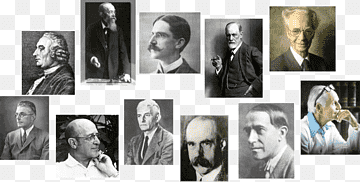
    some photos of social psychologists proponents

    Leonard Berkowitz pioneered the study of human aggression in 1974. Leonard Berkowitz was an American social psychologist who lived between 11th August 1926 and 3rd January 2016 and was best known for his research on altruism and human aggression. He prostrated the cognitive neoassociation model of aggressive behavior to help explain instances of aggression which the frustration-aggression hypothesis was not able to explain.

    Other social psychologists including Irving Janis(1972) focused on group behavior studying why intelligent people sometimes makes disastrous decisions when working together.

    Irving Lester Janis was an American research psychologist at Yale University and a professor emeritus at the University of California, Berkeley who lived between 26th May 26 1918 and 15th November 1990.He is best known for his theory of group-think, which described the systematic errors made by groups when making collective decisions.

    Other social psychologists like Gordon Allport and Muzafer Sherif focused on intergroup relationships with the aim of understanding and potentially reducing the occurrence of stereotyping , prejudice and discrimination.

    Social psychologists gave their opinions in the 1954 V. Board of Education supreme court case that helped end racial segregation in public schools in the united states.

    The later part of the 20th century saw an expansion of social psychology into fields of attitudes with particular emphasis on cognitive processes. during this time, social psychologists developed the first formal models of persuasion with the goal of understanding how advertisers and other people could present their message in an effective way. These approaches to attitudes focused on the cognitive processes that people use when evaluating messages and on the relationships between attitudes and behavior. Leon Festinger’s important cognitive dissonance theory was developed in 1957 and was the model for later research.

    In 1970s and 1980s, social psychology became even more cognitive in orientation as social psychologists used advances in cognitive psychology which were themselves based largely on advances in computer technology. The focus of the researchers was on social cognition; an understanding of how our knowledge about our social worlds develops through experience and the influence of these knowledge structures on memory, information processing, attitudes and judgments. The extent to which human decision making could be flawed by both cognitive and motivational process was documented.

    In the 21st century, the field of social psychology has been expanding into still other areas. Examples includes an interests in how social situations influences our health and happiness, the important roles of evolutionary experiences and cultures on our behavior and the field of social neuroscience(the study of how our social behavior both influences and is influenced by activities of our brain).

    Social Psychology continues to evolve a century later after it’s conception. Psychologists will need to continue seeking new ways to measure and understand social behaviors . off course, social interactions and ways of live have been changing since then, and so people’s behavior in response to social interactions likely to be altered especially in the world currently dominated by technology.

    Conclusion

    Our behaviors are greatly influenced by others. Psychologists over the years noted how people affects each others thoughts and actions and notable phenomena like dictatorships and human conflicts triggered study of human behaviors in social contexts. Among the pioneers of social psychology included Triplet(1898) and McDougall(1908). Other important personalities in the development of social psychology includes Kurt Lewin, Leon Festinger, Muzafer sherif and Solomon Asch.

    Leonard Berkowitz pioneered the study of human aggression. You could add your name there in the development of social psychology in the 21st century as well if you happens to develop an interest in the field in the course of our learning here.

    Final words

    We will be exploring more in this field and even dive deeper to explore more interesting topics in social psychology.

    Your views are highly welcomed and we will use them to shape the future lesson.

    Related posts

  • Importance of social psychology

    In this lesson, we will discuss important reasons why one may need to be familiar with social psychology as a discipline.

    Because we are social being, we are involved in social psychology analysis in one way or another, consciously or subconsciously.

    Some of the few reasons why social psychology is taught in schools includes:

    To improve the accuracy in predictions of human behavior

    Most of conflicts we encounter when interacting with each other can be reduced when we understand that others behave the way they do because of underlying factors that has affected their lives.

    Understanding the theory behind their habits can equip us to better manage each others behavior. As an example, many marriage counselors grapple with problems whose origin can be traced to gross failure in the couple’s inability to predict and understand their behavior and interaction.

    Social programs that could result to huge benefits to societies like reducing poverty, crime prevention and conflict resolutions has failed because their originators were inadequate with understanding of the basic principles of social interaction.

    Could help reduce the dysfunction results of interactions

    Social psychology helps us in understanding social behavior and such knowledge can help us, not only individuals behavior but also in determining ways of interacting with them.

    Enables us understand better methods used to influence people

    Social psychology enables us to acquire better understanding of the methods used by powerful or knowledgeable individuals and groups to influence others.

    By developing a systematic statements of our social psychology knowledge and use of scientific data, we can encourage the wide spread sharing of social skills for the benefit of all.

    Study of Social psychology gives structured understanding of one another hence helping us develop clear understanding of how people affect one another.

    Be able to tackle mental illness

    Most of mental healthy problems can be traced from social interactions with others such as conflicts with the loved ones, death of people close to us, being married, family problems, work or professional relationships, comparing ourselves with neigbours, feeling rejected by other people, trying to fit in a group, people gossiping about us,people’s expectations on us,etc.

    Understanding social psychology can help a counselor deal with such issues much easier.

    Marketing

    Social psychology can be used in social engineering so as to change people’s view on a product being sold. A social psychologist can be useful in a marketing department of an organization in developing of adverts and hence increase productivity of the sales team. Adverts and products can be represented in a way that reflects peoples inherent behavior in a crowd and hence becomes more appealing to them.

    Management

    Managers opt to understand social psychology so as to create a social environment that can create motivating environment to the team members. Understanding social psychology can help a manager become better leader as it will help them become more empathetic to the employees and maintain better working relationships.

    parenting

    Parents that understands social psychology will be careful with social environments they create for their children because they understand how such environments can shape the future long life behaviors of the children they are trying to raise. Parents will also be able to detect change of social life of their children from their change of behavior.

    Creating and maintaining relationships

    Relationships with your spouse, friends and family members can be made better by standing sociology because we will approach each other with understanding.

    Social psychology is important to some few areas in which it has direct applications. Such fields includes:

    Education Psychology

    It is a branch of pyschology concerned with questioning, examining, measuring and analyzing behavior related to learning withing a school or classroom environment. It also deals with child growth and development as we will encounter in future lessons.

    clinical Psychology

    This is the application of psychological knowledge, methods and techniques in treatment of mental disorders. A clinical psychologist can diagnose mental illness using psychological testing and work closely with psychiatrists who have different roles from that of clinical psychologist.

    Social Psychology is built on two key assumptions:

    1. All behavior occurs within a social context

    It assumes that people are sensitive and always responds to other people’s feelings, thoughts and behavior. For example, you gets irritated with people that behaves badly.

    Another example is the study of empathy where we tend to be highly responsive to other people’s pain and before we realize it, we express emotions and other bodily states that drives us to act towards helping them.

    Another example is the study of social interactions between strangers. Often, before we even realize it, we have formed an impression of one another often based on superficial qualities. For example men with baby-face are trusted more than people with pointier faces.

    2. A major influence on people’s behavior, thoughts and feelings are other people and society.

    As social species we are always influenced by those around us and we always in turn influence those around us and this happens in all levels of social interactions.

    Individuals have an influence over us through social power and obedience.

    Society and groups always demand conformity of it’s norms and beliefs to every person that would have claim to be membership of the group nor the society. Most often, those that would not obey rules of the group are punished by ex-communication or other forms of punishment.

    What a society believes in is always considered more power superior as opposed to individuals point of view. Furthermore we usually behaves differently when we are in groups as opposed to when we are alone. For example when we engage in picketing, strike of football hooliganism.

    The assumption of the social approach to psychology is that people acts in a way so as to fit in a group mostly because failure to adhere to societal rules is regarded as abnormality and an acceptable especially in collectivist cultures. Thieves, rapists, lunatics, drug addicts and other social misfits are considered abnormal not because of their thoughts and actions, but because what they do does not fit into expected behaviors for the members of their community.

    Conclusion

    Social psychology is important because human beings are social in nature.You cannot separate human beings from social aspect of life and there are usually many contexts of social interactions

    We are born and develped in social environments and we shapes our behaviors to fit into those social environment into which we find ourselves in.Individual’s behavior is majorly dependent on their social environments.

    The way we see others, and the way we think they see us, can have a big impact on our thoughts, feelings, behaviours and decisions. Study of social psychology helps us understand how these factors can influence us as individuals or as a group.

    Related Topics

    Introduction to social psychology

    References:

    Sociology for healthy sciences, Zerihun Doda, M.A. Debub University.

    sociology, RAJIV Gandthi University Arunachal Pradesh, India.

  • Introduction to psychology

    The word psychology is derived from two Greek  words:

    • psyche ->mind, soul or spirit
    • logos ->knowledge, discourse or study.

    Psychology is therefore a study of the mind.

    Psychology is concerned not only with what all humans have in common, but also looks at how every one of us differs from each other in terms of our beliefs, personalities, and capabilities.

    In psychology we tries to understand why one person has different preference from us. Why one person prefers to be alone and reserved while another person derives their satisfaction and joy by getting attention from people.

    In psychology we try to figure out why some people has certain feelings or why we are likely to act in a different way given the same situations. For instance you may understand why some people are able to maintain one relationship for a long time while another person hop from one relationship to another quitting relationships with the slightest indication of a red flag and consequently creating a series of exs in the process. In psychology we could be able to dissect such behaviours in terms of insecurities gathered in childhood and other factors.

    By studying psychology, you may understand why your friend fears rats while you could be fearing cockroaches.

    some people fear thunder while some may not be bothered and all this lies in our mind.

    The emergence of Psychology as a separate discipline is commonly dated from 1879, when Wilhelm Wundt opened the first psychological laboratory at the University of Leipzig in Germany.

    Wundt and his co-workers were attempting to investigate the mind through observing and analysing the structure of their own conscious mental processes with the aim of analyzing the basic structure of thought and perception. Later on, this method of studying psychology was disapproved because of its subjective nature and it’s difficulties in making meaningful and realistic observation.

    Watson in 1913 proposed that Psychologists should confine themselves to studying behaviour, since it is the measurable and observable by more than one person.According to Watson, The study of inaccessible private, mental processes was to have no place in a truly scientific Psychology.

    Definitions

    Psychology is the Science of Mental Life, both of its phenomena and of their conditions,(James’s, 1890). Phenomena in this context means such things like feelings, desires, cognition, reasoning, decisions and the like.

    Psychology is that division of Natural Science which takes human behaviour of the doings and sayings, both learned and unlearned as its subject matter, (Watson, 1919).

    Psychology is the scientific study of behaviour where Its subject matter includes behavioural processes that are observable, such as gestures, speech and physiological changes, and processes that can only be inferred, such as thoughts and dreams.(Clark and Miller’s ,1970).

    Psychology is the scientific study of people, the mind and behaviour. (the British Psychological Society (BPS)).

    Conclusion

    There is so much to study about psychology and when we study it, we are likely to understand human beings better, probably we will be more sympathetic than judgemental when we see people behaving in a way we deem inappropriate and help them instead of avoiding them. Understanding psychology will help you create and maintain better relationships and makes you bring more joy and peace to people around you.

    keep patronizing this site for more interesting lessons about the mind:;

    Question to ponder

    Is there any relationship between our heart and our mind?

    post your answer in comment section and see what others have to say…

    Related Topics


    Home

  • How to study effectively

    How to study effectively

    Have the right environment

    Establish a quiet place, free of distractions, where you do nothing else but study. Ensure your place is tidy and clean. Where possible, make it look like a study place.You mind will condition itself to associate such environment with studying, so that entering the room or area will be your trigger to begin learning.

    A picture of a study desk

    Have a learning schedule

    Schedule your study time. Divide the content to be studied into chunks of manageable sizes that can be covered in a unit of time . Instead of studying for many hours continously, try study sessions of 1 hour or 2 hour each. With intermittent break along the way.

    Set realistic goals in studying

    Have a task to complete per given time. Have set specific goals for yourself each day and every week and for individual study sessions. Your goals should be challenging but not overwhelming. If the task for an individual study session is manageable, it will be easier to sit down and face it. Completing the task you have set for yourself will give you a sense of accomplishment.

    be an active learner

    The more active a role you play in the learning process the more you will remember. One effective method is to use index cards as flash cards. Write a key term or study question on the front of each card. On the back, list pertinent information from the text and class lectures.

    Imagine yourself an examiner and trying to set questions from what you have studied. revise a related topic if it is needed in the current part of study if you have not grasped the concept.

    make notes and summarize in diagrams where possible

    Avoid over learning

    Overlearning means studying beyond the point at which you can just barely recite the information you are trying to memorize. Review the information again and again until it is firmly locked in memory. If you are subject to test anxiety, overlearning will help.

    keep refreshing your mind

    Forgetting takes place most rapidly within the first 24 hours after you study. No matter how much you have studied for a test, always review shortly before you take it. Refreshing your memory will raise your grade.

    take a nap

    Sleeping immediately after you study will help you retain more of what you have learned. If you can’t study before you go to sleep, at least review what you studied earlier in the day. This is also a good time to go through your index cards.

    Related topics

    introduction to social psychology

    Precisestudy