
The Induced Electromotive Force (EMF) is a fundamental concept in electromagnetism that explains how electrical energy can be generated without direct contact between a power source and a conductor. Induced EMF occurs when a conductor experiences a change in magnetic flux, causing an electric potential difference to develop across it.
This principle, discovered by Michael Faraday, forms the basis of many modern technologies, including electric generators, transformers, and induction motors. Understanding induced electromotive force is essential for students and enthusiasts of physics, as it reveals how magnetic fields and electricity interact to power countless devices in our daily lives. In this article, we will explore the meaning of induced EMF, the factors that affect it, and its practical applications in science and engineering
Through careful experiments, Scientist Michael Faraday discovered that a wire capable of conducting electric current produces some current when it is made to move through magnetic field.
Experiments on electromagnetic induction
Consider the following diagram below

G stands for the galvanometer.

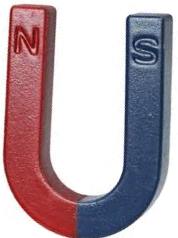
The galvanometer is connected to a copper cable which can be moved up and down between the two poles of the u-shaped magnet in arrangement similar to the following.

After the setup, one can do the following to the copper rod XY so as to investigate inducement of current.
- Move it vertically downwards between the poles of the magnet
- Move it vertically upwards between the poles of the magnet
- Hold it stationary between the poles of the magnet
- Move it parallel to the direction of the magnetic field
- Move it to cut the magnetic field at various angles like 45o,90o,60, etc.
- Hold the wire stationary and move the magnet upwards and downwards
here is an animation to show the lab activities:
Likely observations
When the wire is moved up, the galvanometer deflects in one direction and when the wire is moved downwards the galvanometer deflects to the opposite direction
When moved horizontally or held in a fixed position there is no deflection in the galvanometer.
The magnitude of the induced current increases with the angle at which the conductor cuts the magnetic field and maximum current is observed when angle is about 90o and current is zero when conductor moves parallel to the magnetic field.
This shows that e.m.f is induced due to the relative motion of the wire or the magnet.
Investigating EMF using a coil
A coil of wire, galvanometer and a magnet are set as shown.

A movement of the pointer on the galvanometer is observed due to the following:
- When the magnet is moved towards the coil at a steady speed
- magnet moved from the coil at a steady speed
- magnet is held stationary in the coil
- The coil is moved towards and from the magnet
Observations
The pointer on the galvanometer deflects in one direction when the magnet is moved towards the coil and in the opposite direction when magnet is moved away from the coil.
The galvanometer deflects in one direction when coil is moved towards a stationary magnet and to the opposite direction when moved away from the stationary magnet.
When there is no relative motion between the coil and the magnet, no deflection is observed.
Explanations
The magnetic fields exerts force on electrons in a conductor when there is relative motion between the conductor and the magnetic field causing them to flow in the conductor.The movement of electrons causes convection current whose direction can be determined using Fleming’s Left-hand rule.
Electrons entering a magnetic field are usually deviated as shown in figure below due to force from the magnetic field.

Consider a section of conductor XY cutting a magnetic field as shown in figure below.

From the Fleming’s left-hand rule, it can be determined that the electrons in the conductor experiences a force that pushes them from X to Y causing conventional current to flow in direction YX.
From the above illustrations and from lab experiments, we conclude that; whenever there is a relative motion between a magnetic field and a conductor capable of carrying current, an induced current flows in the conductor as a result of an induced e.m.f in that conductor
Definition: Electromagnetic Induction is the process whereby a current is induced inside a current carrying conductor due to changing magnetic flux with the conductor.
Revision questions
Related Topics
- Factors Affecting the Induced e.m.f
- An a.c generator
- Isaac Newton
- Physical Quantities
- Measurements
- Home