
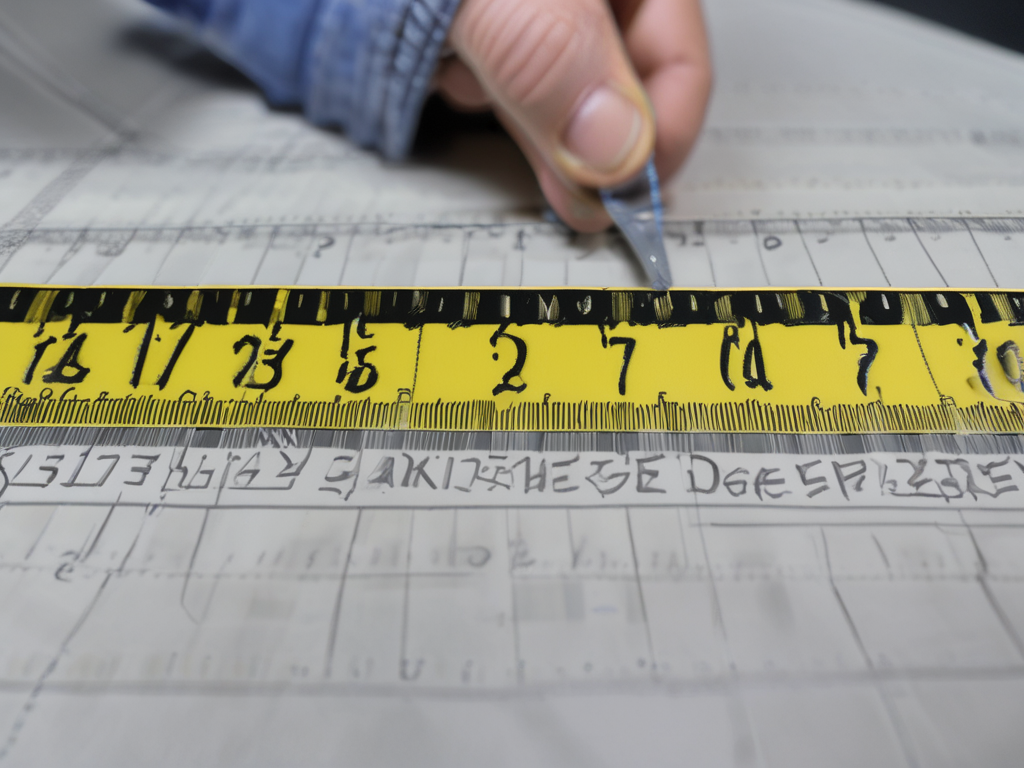
A ruler is a tool mostly used to measure small lengths. A metre rule has a length of one metre, which is equal to one hundred centimeters.
A ruler, also known as a rule, scale and sometimes a line gauge, is an instrument used to measure lengths. A user estimates a given length by reading from a series of markings called rules along an edge of an object whose measurements are required. Mostly it is a rigid straightedge which allows one to draw straight lines.
you can use a meter rule to determine approximation of given length or you can use the rule to get accurate measurements.
- Approximation – This includes estimating the length.
- Using a standard measure(instruments)
- Meter rules and half meter rules are used.
- They are graduated in centimeters and millimeter.
- They are made of wood, plastic or steel.
How to read a ruler
Reading measuring instruments at an angle can make us read incorrectly. To be able to read a ruler accurately and effectively, proceed as follows:
- Put the zero (0) mark to coincide with the start of the object to be measured.
- Look perpendicular to the edge end of the measurement taken
- For accurate reading, always place your eyes vertically above the mark to avoid parallax. see figure 1.1 below

The figure below shows the correct measurement of length using metre rule:

Errors associated with measuring with a ruler includes:
- The end of the object is not aligned to the zero mark of the meter rule scale as shown.

The rule is not in contact with the object

The error that occurs when the position of the eye is not perpendicular to the scale is called parallax error
Related Topics
- Measuring with a ruler
- Area
- Area of irregular shapes
- Physical Quantities
- Length
- Reading a meter rule
- Measuring with a meter rule
- Area of irregularly shaped surfaces
- Volume
- Volume of regularly shaped objects
- Measuring volume of liquids
- Volume of irregular solids
- Measuring Mass
- Density
- Densities of some substances
- Density of mixtures
- Questions on Measurements
- Home