
Tag: dailyprompt

  • Some Trigonometric Ratios

    Some Trigonometric Ratios

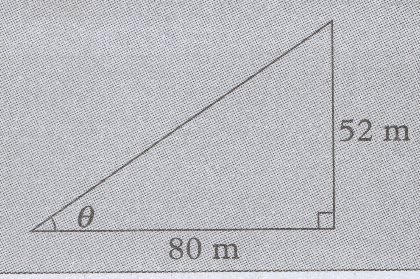
    Consider a right-angled triangle ABC below.

    The angle θ can be expressed in terms of cosine ratio or sine ratio. The hypotenuse of the triangle has dimension r.

    Adjacent side to angle θ is the line AB and the opposite side to the angle θ  is line BC.

    expressing angle θ  in terms of cosine ratio and sin ratio:

    by use of Pythagoras theorem:

    (AB)2 + (BC)2 = r2

    (rcosθ)2 + (rcosθ)2 = r2 and hence

    r2 cos2 θ + r2 sin2 θ  = r2

    then dividing everywhere by r2 , then we get

    cos2 θ + sin2 θ  =1 which is a trigonometric identity which holds true for all values of  θ.

    Example

    If tan θ = a, show that:

    solution

    we factor out cosθ to get:

    but sin2 θ + cos2 θ  =1

    hence:

    but tanθ = a, so 1/tanθ = 1/a

    Related Topics


  • Using tangents in Solving Triangles

    Using tangents in Solving Triangles

    if you know the tangent ratio of a given angle, you already know that the ratio is a result of dividing opposite side over tangent. If you know the length of one side, the you can get the other.

    let us say there exits an angle θ that has a tan ratio of 0.821 and the side opposite to it is 8.5 cm. Then the adjacent side can be obtained as follow:

    Example

    Find the length BC in the figure below:

    solution

    The side BC is the opposite side and line AB which is the adjacent side to angle  θ which is equal to  70o is equal to 25cm. Then we proceeds as follows:

    Exercise Questions

    Use tangents to find the lengths of the side marked x in the below tri-angles.

    Q1: Find the unknown side in each of the following

    (a)

    (b)

    Q2: Find the unknown angle θ,α in each of the following triangle

    (a)

    (b)

    Related Posts


  • Hangouts

    Hangouts

    The wise usually says that you are an average of about 5 people that are close to you. Another one said “Show me your friends, i will tell you who are are”. We are influenced by people around us. They affects our thought patterns and how we se things. We adopt the communication styles of people we spend time with and if they are not good people, they will influence us negatively.

    People of the ancient times said. “Do not be deceived, evil companies ruins good morals”. If you starting hanging out with a group of people, no matter how assertive and confident you are, soon or later you will adopt few of their behaviors. In Psychology we can talk about group thinking where people that spends time within the same environment tends to think in a certain way that is common to everyone within that locality.

    With this knowledge, I value good companies. I like people with positive energy, those that talks possibilities. I get mad when am around people that talks negatives because they can cause you thoughts of helplessness and despair. People that talks negatives can really discourages someone from a worthy course, because what we hear will affect us, soon or later.

    I like happy people. Joyful people are very attractive to me. I feel very comfortable and secure among people that discusses ideas and the universe as compared to people that discusses people. I get quickly tired and bored with people that talks about others. If our boss is bad, better we talk about how to forge ahead beyond our employments than discuss our boss.

    People that have some things that they are actively pursuing are very attractive to me. I loathe idle people because they can be very destructive. Apart from gossips, they are prone to being jealous and malicious. If you can, avoid idle and lazy people.

    Another group of people i value and appreciate being around are calm , just and kind people. I like people that talks few words per unit time. I enjoy company of people that can pause a conversation with a long silence. I like people that i can be around, just feeling them and seeing them, but don’t have pressure of feeling our space with words. I love people that understands that, we don’t have to keep saying things just to feel connected. People that can be comfortable with silence and still with can bond in that silence are priceless. I hate noise and people that will talk nonstop for a long time, really makes me very uncomfortable. If i can have people we can stare at each other, smile and enjoy peace around without words, i feel very good.

    I like people who trust that am thinking about them without constant needing affirmation.

    People that believes that small things of life like exchanging petty gifts and flowers are very enjoyable to live with as opposed to people that are always chasing after the bag. People that value a worthy cause over a lot of money are also very attractive to me.

    People that are not easily offended are comfortable to be with because they let me to be myself, i value them because i can stay with all kind of people without being offended, unless they talk too much:;

    However, i like funny people that can throw jokes here and there, people that reminds me that life doe not need to be soo serious. I prefer people who can bend rules a little just to allow some humanity, creativity and fun. I value people that prefers creativity and flexibility over people that likes following stick rules and rigid to the set rules. I like it when my team can decides what will work that what it is. If you happen to be in this category, kindly send me a comment on how to reach you.

    Related posts


  • Characteristics of Wave Motion

    Characteristics of Wave Motion

    The characteristics of a wave motion can be explained with reference to the oscillatory motion of mass attached to a spring or by use of a bob on a swinging pendulum.

    The figure below shows a mass that is attached to a spring and one end and fixed on the other end as shown

    illustrating mass oscillating on a spring
    illustrating mass oscillating on a spring

    Initially, the mass is at rest at the end of the spiral spring at position M. The mass is then depressed slightly to position L and released and is then observed that it oscillates up and down about the mean position M.

    One complete oscillation occurs when the mass moves through positions N-M-L-M-N. That is, it makes one complete oscillation when it has returned to it’s starting position and is moving in the same direction. For example if the mass starts at M the move to M-N-M, it will not have moved a complete oscillation because although it has returned to it’s starting position, it is moving in the opposite direction.

    Consider a swing pendulum shown below

    illustrating swinging pendulum
    illustrating swinging pendulum

    For the pendulum, the bob makes a complete oscillation when after an initial displacement from position X, the pendulum swings through position X-Y-Z-Y-X. If the mass in the above diagram takes two seconds to make a complete oscillation, a sketch of it’s time-displacement graph for the motion will be as shown below.

    Displacement time graph for a swinging pendulum
    Displacement time graph for a swinging pendulum

    As can be seen from the above diagram, the displacement time graph for an oscillatory motion is a sine curve similar to the transverse wave profile.

    To describe the general characteristics of a wave motion, consider the motion-time graph representing a certain wave motion as shown below

    To illustrate wave characteristics

    The Displacement value A shows the maximum displacement A from the mean position o.

    P and Q are said to be points in phase because the wave pattern is repeating itself at Q and P.

    The distance between two points in phase is called the wavelength λ. The distance between P and Q represents on wavelength.

    The wave starts repeating itself at P before repeating itself again at Q. Hence when the wave moves from P to Q, it is said to make one complete oscillation.

    The time taken to complete one oscillation is known as the Periodic time T. In the motion-time graph above, the periodic time is two milliseconds(ms) as it has taken 2ms to make one complete oscillation.

    Two points in a wave are said to be in phase, if they are in the same position, relative to the wave profile. P and Q are in phase.

    The number of oscillations that can be made by a wave motion in one second is called the frequency f of the wave and is usually the reciprocal of the periodic time.

    from the above diagram, it takes 2ms to make one complete revolution which is equivalent to (2/1000)s = 0.002 Seconds.

    The frequency of the wave can then be determined as follow:

    It can be shown that:

    Where T is the periodic time and f the frequency of a given wave

    Related Topics


  • Types of waves

    Types of waves

    What is a wave

    Wave is a propagation of disturbances from place to place in a regular and organized way.

    It can also be defined as a disturbance or variation that transfers energy progressively from point to point in a medium and that may take the form of an elastic deformation or of a variation of pressure, electric or magnetic intensity, electric potential, or temperature.

    There are various ways we can categorize waves:

    Electromagnetic waves

    This are kind of waves that can travel in vacuum and do not require material medium for their transmission. They can also be explained as a form of radiation that travel though the universe and results from oscillation of electric and magnetic fields perpendicularly to each other.

    Sun is a huge producer of electromagnetic waves.

    Illustrations showing production of electromagnetic waves
    Illustrations showing production of electromagnetic waves

    Mechanical waves

    They are waves that requires material medium for transmission where their transmission is determined by vibration of the particles in the medium. Mechanical waves can be either transverse or longitudinal

    Mechanical waves are produced by a disturbance, such as a vibrating object, in a material medium and are transmitted by the particles of the medium vibrating to and fro. Such waves can be seen or felt and include waves on a rope or spring, water waves and sound waves in air or in other materials. The figure below shows a a helical spring vibrated to produce both longitudinal and transverse waves.

    A helical spring used to produce longitudinal and transverse waves.
    A helical spring used to produce longitudinal and transverse waves.

    Transverse waves

    This are waves whose transmission is such that the angle of vibration of the particles is at right angles to the direction of the wave progression.

    A transverse wave can be sent along a rope (or a spring) by fixing one end and moving the other rapidly up and down such that The disturbance generated by the hand is passed on from one part of the rope to the next.

    Consider the diagram below.

    Illustrating formation of transverse wave
    Illustrating formation of transverse wave

    To further illustrate the formation of a transverse waves, consider a slinky spring stretched along a smooth bench while one of it’s end is attached to a rigid support while the other end is held by a hand. The end held by the hand is swung up and down at right angles to the spring or rope as in figure below;

    illustrating transverse waves using a slinky spring
    illustrating transverse waves using a slinky spring

    The wave created above is said to travel as a series of crests and troughs.

    The displacement of an individual particle in relation to the direction of wave motion is as shown.

    Particle displacement in a transverse wave
    Particle displacement in a transverse wave

    Longitudinal waves

    In longitudinal wave that are progressive waves, the particles of the transmitting medium vibrate to and fro along the same line as that of wave travel.
    A longitudinal wave can be created along a spring by stretching out a slinky spring on a bench when it is fixed at one end and the free end repeatedly pushed and pulled continuously.
    see the figure below:

    illustrating formation of longitudinal waves
    illustrating formation of longitudinal waves

    Compressions and rarefactions are formed on a longitudinal waves.

    Compressions(C)are where the coils are closer together and rarefactions
    (R) are where the coils are further apart along the spring.

    In longitudinal waves , the vibration of particles are said to be in a parallel direction to the direction of wave travel.

    A good example of longitudinal waves is the sound wave where particles of air vibrates in the same direction as the movement of sound energy.

    Continous to and fro movements at one end results in the formation of sections of compression and alternating with rarefaction along the length of the string as shown.

    illustrating longitudinal waves on a slinky spring
    illustrating longitudinal waves on a slinky spring

    The displacement of a particle in a longitudinal wave in relation to the direction of wave motion is as shown

    An illustration of a particle vibration in longitudinal wave
    An illustration of a particle vibration in longitudinal wave

    Individual particles in the slinky spring are set into periodic vibrations in line with the directions of the wave motion.

    The wave motion affects the inner particle spacing where particles in the compression part are pushed closed together while particles in rarefaction part are pulled slightly further apart.

    Variation in inter-particle separation is accompanied by variation in pressure such that sections under compression are at higher pressure while those under rarefaction are at low pressure. This pressure variation is the one causing the longitudinal wave motion.

    Progressive waves

    These are waves that moves continually away from the source.

    Progressive waves are found in both longitudinal and transverse wave and they are described as waves that are continously moving forward from the source carrying energy of the vibration along as they move.

    Consider a case when you drop a small stone on a surface of calm water; The impact of the stone creates water waves that moves outwards carrying the energy of the impact away from the source as shown.

    Illustrating water waves
    Illustrating water waves

    as illustrated in the above figure, the water waves moves away from the source and as they move that way, the energy is spread over an increasingly large area causing gradual increase in energy.

    Pulses

    A pulse is generated when a single vibration is sent through medium. A pulse can be generated for both transverse or longitudinal waves. A pulse from a transverse vibration is as shown below.

    an illustration of transversal pulse
    an illustration of transversal pulse

    A pulse from a longitudinal vibration is as shown below

    Illustration of a longitudinal pulse
    Illustration of a longitudinal pulse

    Wave trains are generated as a result of continous vibrations at a constant rate in a medium where the medium is distorted into repeated patterns of crests that are alternating with troughs in a transverse wave .

    For longitudinal waves, the medium is set into repeated patterns of compression sections that are alternating with rarefaction sections as shown.

    Illustration of compressions and rarefactions
    Illustration of compressions and rarefactions

    Related Topics


  • Shoes I will never forget

    Shoes I will never forget

    A shoe is part of clothing that protects our feet. Shoes are important part of life, it can be very difficult to walk without shoes in the streets because you risk your feet from being bricked by objects or becoming infected by disease causing germs in the streets.

    In our community, they says that shoes can be used to determine what kind of man you are, which is partly true because most often we buy shoes or choose one based on our economic status. Shoes comes with different shapes, quality and type of materials. They can be leather shoes, canvas or rubber shoes etc. In addition, shoes can be used as part of fashion and style especially among women where they ladies wear shoes to match a certain occasion or function.

    Lack of shoes has been associated as a mark of extreme poverty and so shoes is considered an essential part of life.

    Personally i have pair of shoes i will never forget. It was a pair of shoes bought for me by my father when i was still in high school. It was a black boot . The special thing about that pair of shoes is that it never wearied out when i wore it daily for three years i had it in high school. It was a tough one that helped me to run through rough terrain on my way to school. It made me feel powerful, like i was driving a four wheel drive. I was not careful on thorny bushes of the grassland savannah that characterized environment where i grew up.

    The shoes outlived it’s expected life. It was the shoes i used to look for jobs on various cities of my country before i could join university. The pair of shoes was among the most favorite one among the three pair of shoes i had while in the university. Before i finished my three years of university education, the other two pairs worn out completely and my boot endured past university graduation day. It was the only shoe i had when i was looking for jobs and moved from one county to another to take applications for jobs. I moved a total of 12 counties, and that pair of shoes was an important too in my tarmacking. I only retired it after getting a job and was able to buy another pair of shoes.

    I donated it to a poor man near my residential are 3 days after meeting a high school friend who noted that i still had that old shoes from high school and sarcastically asked me. “It is a family inheritance you are supposed to pass from generation to another?”. We laughed loudly, but i did not want it to be generational pair of shoes. It’s sole was warn out a little bit and it’s skin was cracked , but i knew that it will create a great comfort to that old man in the street. I also knew that, i don’t want my old friends see me with that pair of shoes again. But forever, it will be remembered in my memory.

    Related posts


  • Dear life

    Dear life

    key Note:

    As long as you are breathing, you have chances of obtaining whatever you have desired in life. Even the slightest of chances do happen sometimes:;

    I think the greatest gift of all time i have received is the gift of life. whatever imaginable gift i can ever be gifted cannot supersede the gift of life, because without life, all other things are useless to me. Whatever that can be desired by man is very useless to him if he is not living to see it.

    If you can live peacefully and in health and be able to obtain happiness and love in your days on earth, you are blessed beyond measure.

    All other things we struggle soo much to have becomes useless to us, our achievements, the wealthy we have accumulated, the fame etc., do not apply when breath of life is taken from us.

    As long us you are living, you have possibilities to achieve your dreams, no matter how small are the chances. If you are sick and breathing, you can get healed, no matter how slight are the chances. The game of chances can happen to all. There are poor people that won charity. So even poor and homeless have chances of becoming rich as long as they are breathing. Prisoners has chances of gaining freedom and even becoming rulers as long as they are breathing.

    One wise person wrote this sayings:

    Therefore i believe that the best gift one can give you is adding days to your years. So give me joy and peace because it lengthen my days.

    Related posts


  • Python Reserved words

    Python Reserved words

    Reserved words in a language are words that have very special meaning to the language. If python sees any of it’s preserved words, it have only one and only one meaning to it.

    The words you will make by yourself as a programmer will be called variables. The words you create by yourself should never consists of any of the reserved words.

    Reserved words in python includes

    and

    and is a logical operator that matches the boolean logic AND that returns true if and only if two operands are true and false otherwise.

    as

    It is used to define a certain word with a different name which is usually referred as alias. It allow user to define a friendly name in programing activities. For example, consider an programmer that want to import a file called matplotlibray which will be used most of the time in a program.

    We can us the as to rename the file mat as as in:

    import matplotlibray as mat

    now we can be use mat instead of the word matplotlibray

    assert

    used in debugging where it allows one to test the correctness of a code by checking if some specific conditions remains true.

    Until there is a bug in the program, the assertion remains true. for example the statement assert number > 0 tests a condition where a number must be greater than 0 and if not, a debugger throws an AssertionError.

    break

    It allows you to exit a loop when an external condition is met and allows the program to resume the next statement after the loop.

    it terminates the loop that contains it and directs the program to flow to the statement that follows the block.

    It is used in for loops and while loops.

    For example:

    for x in numbers:
        if x =5:
           break

    continue

    It makes the code skip the current iteration and proceed to the next one

    It is useful where we need to skip part of the loop but remain in the same loop block.

    Continue skip the statements in the current iteration of the loop and moves the control back to the top of the loop.

    For example:

    In the above code, the if statement checks if the number is divisible by 2 and if it evaluates true, it skips to the next number which is odd. Hence the program print odd numbers between 30 and 50 as shown.

    class

    used to create a python class. class is a template for objects. Creating a new class creates a new type of object, allowing new instances of that type to be made.

    An object is a collection of variables and methods which acts as a blue print for that object.

    we use class to create a class in Python. for example

    The code snippet above shows a student class being created.

    An object of class student can be created from class as shown:

    def

    it is used to define a function in python. Every code you put between the def function name and it’s end with be considered as a single logical piece of code with statements that can be executed at once by invoking the name of the function.

    The following code defines a function called grade that calculates student grade based on marks passed to it:

    We can call the function and provide pass some marks to it as an argument as shown below:

    del

    used to delete object in python. It’s primary goal is to destroy objects in python code. When del is used against an object , the object is removed from the scope of the object.

    consider the student class we created earlier..

    When run, the program gives the following output:

    supposed now we delete the object student as in code below:

    running the code will cause an exception error that shows missing of an object student as shown

    The del keyword can also be used to delete objects like dictionaries, items in a list, tuples and even user-defined objects.

    elif

    Used to include multiple conditional expressions after the if condition or between the if and else conditions.

    else

    It is used in conditional statements like if statements and is used to decide what to do if a condition is false.

    try

    It is used in try-except block and it defines a block of code that is tested for errors, if nor errors is detected, the code in try block is executed, otherwise it is passed to the except block. Different error types can be defined in the except block.

    except

    used in try-except block and defines a block of code that should run if the try block raises an error. Except pairs with try where try block is executed where there is no exception error but when there is an error that prevents that block to execute, the control is transferred to except block.

    finally

    it defines a block which will always be executed after leaving a try-except statement if some exception was not handled by the except block. It helps in deallocating the system resources.

    for

    It is used to create a loop helping a program to iterate through sequence of items like a list, tuple and dictionary etc.

    from

    used to import a specified section of a python module. generally used with import, from is used to import particular functionality from the module imported. For instance the code code below will import sqrt method from the math module

    import math
    
    from math import sqrt
    myNumber = math.sqrt(80)
    print(myNumber)
    #120

    global

    It is used to allow programmer modify a variable outside of the current scope. consider the code below.

    x = 2000
    
    def reduce():
    while x<=0:
    x -=2
    print(x)
    reduce()

    When run, the code produces the error shown

    The error is because the x referenced in the while block is not defined as far as the python interpreter is concerned. The x defined outside the while block is out of reach of the while block, hence it is considered non-existence.

    we can rewrite x inside the loop with the word global to tell the block that it should use the x that was defined outside it. The modified code will now run

    if

    it is used to test a condition and if condition evaluates to true, the code in the if block is executed.

    If is usually referred to as a conditional statement because it is used to execute a block of code only when a specific condition is fulfilled. consider the code below:

    when the code above is run, nothing will happen and no output will be on the screen. This is because the condition that the number be fully divisible by two is not me.

    import

    used to refer a code from another module. For example we be referring a pow function which is in math module. To use the pow function which is defined somewhere else, we must import the module that has defined it. I have used the pow function to define a function that accept a single parameter and square it.

    in

    It is a word used in checking existence of a value in list, range or a string. It returns true if a certain element is present in a python object and false otherwise.

    is

    Used to test if two variables belong to the same object. It returns true if two objects are the same.

    output: True

    output: False

    lambda

    Used to create small anonymous functions that can take any number of arguments but can only have one expression. Anonymous functions means a function without a name.

    import math
    

    number = int(input("Enter a number: "))
    root = lambda number: math.sqrt(number)
    print(root(number))

    In the above code, we define a function which is assigned a variable name root. the lambda function calls the squareroot function of math class

    nonlocal

    In python, variables can be declared in three different scopes:

    • Local scope
    • global scope
    • nonlocal scope

    A function defined within a function and can only accessed within it is called a local variable.

    A variable declared outside of a function such that it can be accessed inside or outside of the function is referred to as a global variable.

    nonlocal keyword is used to work with variables inside nested functions where the variables should not belong to the inner function.

    Example code:

    def outsum():
    x=-2
    sum = 0
    while x <5:
    print(x)
    sum +=x
    x +=1
    print("sum is: ",sum)
    print("*********************")

    def innersum():
    x=0
    print("We are doing the inner thing now")
    nonlocal sum
    while x <=5:
    sum +=x *2
    x+=1
    print("The inner arithmetic is:",sum)
    innersum()

    not

    used in conditional statements or other Boolean expressions to invert the Boolean value or expression. not will convert the True evaluation to False and vise versa

    x=0
    print(x)
    print(not x)

    #0
    #True

    or

    It is a logical operator used to combine conditional statements returning true if one of the statements evaluates to True.

    Example:

    y = (2>-2 or -3 > 3)
    T = (-4 > 4 or -5 > -5)
    print(y)
    print(T)

    #True
    #False

    pass

    used as a placeholder for future code.

    def summation():
    pass

    raise

    It is used to raise an exceptions or errors where it stops the flow of the program.

    a=int(input("Enter numerator: "))
    b=int(input("Enter denominator: "))
    if (b==0):
    raise Exception("Division by zero is not accepted")

    return

    It used to end the function call and return the result to the caller. The function terminates on seeing the word return giving back whatever is after the return keyword.

    Example:

    def summation(x,y):
    sum=0
    for i in range(x,y):
    sum +=i
    print(sum)
    summation(20,55)
    #1295

    while

    It is used to create a while loop which defines a loop that executes a piece of code until a certain condition becomes false: Like in the code below, the code keep printing “Am staying here!” until when x is added up to 6

    x=1
    while x < 7:
    print("Am staying here!")
    x =x+1
    #Am staying here!
    #Am staying here!
    #Am staying here!
    #Am staying here!
    #Am staying here!
    #Am staying here!

    with

    It replaces a try-catch block with a concise shorthand. It is a replacement for the commonly used try/finally error handling statement.

    A common example of using with keyword is when reading or writing to a file

    with open("governmentStudents.txt","w") as file:
    file. Write(Name, DOB, AGE)

    yield

    controls the flow of a generator function. It is similar to a return statement used for returning values in python.

    when you call a function that has a yield statement, as soon as yield is encountered, the execution of the function halts and returns a generator iterator object instead of simply returning a value

    generators allows you handle large datasets with minimal consumption of memory and processing cycles.

    def buildList():
    EvenList = [2,4,6,8]
    for i in EvenList:
    yield i*2

    Related Topics


  • Budget is not always the right thing

    Budget is not always the right thing

    Daily writing prompt
    Write about your approach to budgeting.

    budgeting is the process of determining how you will spend money against the income you got or you will get within a specific period of time.

    Most often, money in our hands is volatile and it attracts soo many things. So many things of the world needs attention of our money and for most of people, their wants are insatiable. Most of the things we see in displays are things we would like to have, or rather are packaged and presented in such a way that they seduce us to wanting them. We have that inbuilt instincts in us to want to acquire things, and so when we have money, the excitements of spending it on buying things we want is real. Most of people gets joy on spending money for things that they want, shopping and buying of things is enjoyable and most of people are restricted in buying things by the fact that, monetary resources around them are limited.

    Other sources of expenditure are involuntary but quite unavoidable. For instances, once in a while our friends and family members wants us to come through for them by giving them part of our income so as to cater for their emergence needs or those needs that are beyond their abilities.

    If you are not careful, it is very much possible to find yourself spending all your income within a short time, and then find that you have no money to drive your life. We need money for our daily upkeeps. We need money to pay for transport or buy gas to travel to work and buy foods. We need money to cater for future expenses like school fees and shelter for our family. Money is the medium of exchange, which we use to get things we need for our survival. But not always do we spend money on what we need, sometimes we spend on things that makes us feel good and sometimes our emotions do not reason or agrees with reality. Our feelings of wanting to spend time in that expensive hotel and enjoy great moments or the feeling of wanting that shiny silvery expensive apple phone does not always reason that our sources of income are exhaustible and will finish up within a short period of time. The psychological feelings of excitement when buying things is mostly detached from the fact that our incomes are limited.

    Due to the realities of life, and with realization that we cannot always get whatever we want because we will need to use our monetary resources with care, we need to develop a tool that can act as a guide, telling us what we need to buy and what we should forego at any particular moment. This is the work of budget.

    In making a budget, we determine what is the total sum of our income within a given period. If we are salaried people, we know what is our salary. We separate our needs from wants. We write down the necessities that we need to survive hence helping our mind disengage with things that cannot help us to survive. Budgeting helps us avoid things that are attractive but not needed in our lives.

    After determining the things i need, i determine the quantity is should have so as to last me before the next income. I get the price of each item i need, maybe by checking their costs from websites of the stores i buy from, or based on my previous expenditures on them. In the budget, i will start with the recurrent fixed expenditures like house rent, water bills, electric power bills, monthly subscriptions like internet connectivity and newspaper subscription. Then i set apart money needed for transport to work and then for other things like food items and then emergencies. Emergencies includes the money given to friends and relatives when they call for help. If they call and their is some money in an emergency kitty, they are lucky. If they call when emergency fund is exhausted, then they have to look for help elsewhere. That is how is used to do when i started working. I was was working on a tight budget and any mistake on financial matters could lead me to financial distress because i was earning too little in my teaching job.

    However, nowadays i don’t do budgeting. I just pay my bills when they are due and buy things i need. I came to realize that, saving and living in a restricted financial life through tight budgets does not help financial growth. Strict financial budget and avoidance of spending can cause you have a limited life if not well managed. It creates stinginess and fear of spending on you mind, lest you go against your budget. This may cause you to forego a great investment opportunities because you fear spending money. Great opportunities to bring financial break through can come your way, but because you are too careful with your money, you stick with your savings instead of investing. Wealth comes through multiplying money by investing in the right places, budgeting helps you save on emergency but may make you stick to one source of income forever, creating scarcity in our mindset and hindering financial growth and freedom. There are people who spends more but keep on getting more yet some people are very stingy but will never have enough.

    Don’t get me wrong, you cannot manage business enterprises without budgets and strict financial accounting, here am talking about budgeting your personal financial incomes from salaries and wages.

    When you stick to budget, you may become unreliable to your friends because you may ignore their needs when they express them and failing to invest your resources on people that matters in your life limits your ability to create social capital, which may be more important that money itself. When you are too stingy with your money, you may loose connections that may create for you open doors for financial break through in future. I have ever bought something at random in the market and later sold it at some handsome amount later to somebody i met. Somethings you buy are assets and when you are too strict with money, you may not acquire assets because you only budget to consume.

    On my own view, ability to discern the right things to spend money on is better than strict budgeting for those people that hates working on employment and living on salaries. The reason am saying this is because i once forego an opportunity to buy a property that was selling cheap some 10 years ago because of tight budgeting i was taught in school. I could be having a properties worth hundreds of thousands of dollars if i had made the right move. I usually regret my stinginess at that time.

    We usually have personal budget because we are not able to determine the best way to use money. We are helpless before money. We lack discipline or knowledge on where to put our money, mostly due to lack of information or discernment. When we have money, most of us are prone to cone men that sells us fake opportunities. I can say that an average human being is stupid infront of money because money has a way of influencing our thoughts and emotions. Some people says money makes some people becomes stupid, and when it is gone, they become wise again. We usually have good plans for money until we get it and after we get money, we don’t remember our plans, it is a curse of man with money.

    Related posts


  • Centripetal force

    Centripetal force

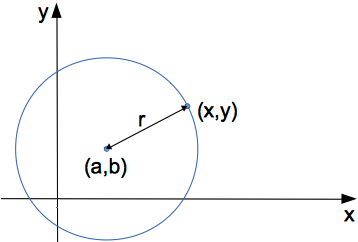
    Consider on object m held by a cord om positioned at A. The Object is whirled in a circular motion and after some time Δt, the object is at position B. The velocity of the object in linear direction changes from VA to VB. If there was no force acting on the body, the object will not change directions but will go in a straight line. There must be a force that maintain the body at a constant distance distance from the center o.

    Centripetal force Fc refers to the force that keeps a body in circular motion. A body in a circular motion is accelerating and from newton’s second law of motion, there must be a force acting on it to cause acceleration. Centripetal force is usually directed towards the center of the circular path. The Centripetal force is the force responsible for the constant change of direction otherwise the body would naturally follow a straight line if there was no force acting to keep the body in circular motion.

    The value of the centripetal force is derived from newton’s second law of motion which states that: the rate of change of momentum of a body is directly proportional to the resultant force in the direction of force.

    Momentum means mass multiplied by velocity.

    Because velocity of a body in circular motion is changing, it’s momentum must also be changing.

    The newton’s second law can be described as F=ma, where a = acceleration and m is the mass.

    but the acceleration of the body of the body is given by a= v2/r, where v is the linear speed of the object while it is in circular motion. hence

    From definition of angular velocity we had shown that, ω is given by v/r, and hence v=ωr.

    it follows that Fc = m(ωr)2/r = mω2r2/r = mω2r .

    Tension

    If a body is attached to a string and swung around on a horizontal circle, the centripetal force that keeps the body in the circular orbit is kept as tension in the string. For the body to remain in circular motion, the centripetal force is equal to the tensional force.

    From the equation Fc = mω2r , it shows that centripetal force is directly proportional to the angular velocity meaning that a larger force will be required to maintain the body in motion if it is swung faster.

    Related Topics