Tag: dailyprompt

  • Social media

    Social media

    How do you use social media?

    I express my thoughts through social media and I find out other people’s thoughts from there. I read news and meet with friends. It is through social media that we can meet those old friends from childhood and reconnect. However, in social media we have met con men that sold us dubious deals.

    A place to market

    Social media is a useful tool for marketing because there are so many people there. Almost everybody that has smart phone has a social media account, may it Facebook, whats app, twitter, linked, mastodon etc. In Facebook you create awareness to a large number of people.

    A place to brag

    Social media is a source of self-pity and anxiety. People flashes in social media, they post nice places, nice cars and family and when you are not very well, you can feel like a failure because you will have an impression that your friends have advanced soo much. However, what most people will post on social media will not always match their reality.

    A place to reconnect

    Almost everybody is in social media, and so if you want to know whether your friend still exists, you can search them through social media. It is a place you can find people you have long lost in touch and seek to reconnect with them. However, social media can be so passive such that people dies and leave their image on social media such that you cannot tell whether they are dead or arrive. I have a case where i kept asking my college friend to call or text me and i wondered why they were not responding. i later learnt that they died two years ago but they left their flashy life on social media. They were people that looked successful but they died in misery. Therefore, social media can give false positives.

    A place of ideas

    Social media is a place where people express their ideas, tell us who they are and what they do. In fact, there is this habit of some employers stalking your social medial profiles to get a grips of who you are. In social media, we post our daily activities and so people can use social medial to decipher who you are beyond your professional outlook. But i dislike people who uses social medial to make professional judgement about workers because people should be let to be and have freedom of expression. Professional judgement should be confined to the work related contexts and the walls of an office.

    communication tools

    social media is usually used by people to drive their political, cultural or religious agendas. Even terrorists could use social media to advance their terror agenda and recruit others. Social media has also been used to bully people and tarnish their image. This is because social media is a platform where people can communicate freely and with anonymity.

    related topics

    lated Topics


  • Thinking about thinking

    Thinking about thinking

    Jot down the first thing that comes to your mind.

    When I start thinking about what am thinking, my mind goes completely blank. I feel like I have not been thinking at all but when am silent and calm, streams of thoughts flow. The streams of thoughts are random and spontaneous, as if they are triggered by radioactivity. But if I start thinking about what am thinking, I hang up, it feels like your phone calling itself, there is conflict inside thought, as if the mind cannot be conscious of itself.

    Our thoughts wander a lot and it is usually difficult to make your mind concentrate on one single thing.

    some facts about our minds

    Here are a few things you may need to understand about our minds and our thought processes.

    • our thought processes happens in a closed black box and is usually understood by observing and describing the various thought we exhibit in different situations which may involve studying verbal and nonverbal cues, behavior, and emotional responses to gain insights into how thoughts manifest.
    • Understanding thought processes involves involve breaking down thinking into components such as perception, attention, memory, language, problem-solving, and decision-making in order to identify how thoughts are formed, organized, and processed.
    • Our minds processes information in a similar ways to computers but our thoughts are greatly influenced by internal and external factors which affects how information is received from the environment, encoded, stored, retrieved, and used to guide behavior.
    • There are biases and errors that affect our thought processes which include tendencies to perceive information inaccurately, making of faulty judgments or relying on mental shortcuts that can lead to irrational decision-making and so individuals may distort reality or make errors in their thinking.
    • thought processes evolve and adapt to changing environmental demands.
    • thought processes vary among individuals due to factors such as genetics, personality, culture, and life experiences.
    • cognitive distortions associated with conditions such as anxiety, depression, schizophrenia, and obsessive-compulsive disorder causes maladaptive thought patterns

    Related Topics


  • Random nice moments in city

    Random nice moments in city

    As I reclined on the bench, the gentle hum of the city wrapped around me like a comforting blanket. People bustled by, their conversations weaving into a soothing melody. Lost in my thoughts, I watched the world pass by in a blur of motion and color.

    Amidst the crowd, a figure caught my eye. A woman, her face illuminated by a warm smile, approached with purpose. As she drew nearer, I noticed the vibrant scarf wrapped around her neck, a kaleidoscope of colors against the backdrop of the urban landscape.

    “Mind if I join you?” she asked, her voice as soft as the breeze that danced through the trees. I nodded, offering a welcoming gesture to the empty space beside me.

    We began to talk, the conversation flowing effortlessly like a river finding its course. She shared stories of her travels, each adventure more captivating than the last. Her eyes sparkled with wanderlust, carrying the wisdom of a thousand journeys.

    Time seemed to stand still as we exchanged tales and laughter, forging a connection born from the serendipity of chance. In her presence, I felt a sense of kinship, as though we were old friends reunited after years apart.

    As the sun dipped below the horizon, casting a golden glow across the sky, we bid each other farewell. With a heartfelt smile, she disappeared into the throng of people, leaving behind a lingering sense of warmth and gratitude.

    That chance encounter with a stranger left an indelible mark on my heart, a reminder of the beauty that exists in the fleeting moments of human connection. In a world filled with chaos and uncertainty, it was a gentle reminder that sometimes, the most profound experiences can arise from the simplest of encounters.

    Related posts


  • No worrying

    Describe a decision you made in the past that helped you learn or grow.

    I decided not to bother myself with what refuses to work and focus on what is working.

    Learning to let go is a skill that am proud to have because it help in saving energy, time and peace of mind. Just noted that, the more I care about everything, the more everything go wrong. I just let what want to work do it and I have peace of mind no matter what happens. This helps me focusing on what matters most and so am able to forge forward with ease

  • Haiti

    What place in the world do you never want to visit? Why?

    I don’t want to be in place where crime is a norm. I want to be in a place where I feel safe and secure.

    Am not comfortable where guns are in the hands of criminals and ordinary people that are not security personal or VIPs. I don’t want to be in a place where an common idiot can decide to shoot everyone because he has been annoyed by her girlfriend.

    I would prefer to visit places that have social order and where rule of the law prevails.

  • Information Literacy

    Information Literacy

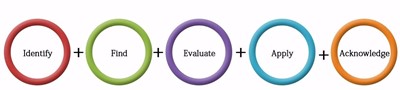
    Information literacy is a set of abilities that enables somebody to recognize when information is needed and have the ability to locate, evaluate and use effectively the needed information.

    Information literacy has increased it’s importance in the contemporary environment of rapid technological change and rapidly increasing information resources where individuals are faced with diverse and abundant information choices in their academic studies, workplace, and personal lives.

    As information increases and becomes readily available, It comes to individuals in unfiltered formats, raising questions about its authenticity, validity, and reliability.

    Information literacy enables learners to master content and extend their investigations, become more self-directed, and assume greater control over their own learning especially when they engage in lifelong learning.

    Being information literate helps us to:

    • Determine the extent of information needed
    • Access the needed information effectively and efficiently
    • Evaluate information and its sources critically
    • Incorporate selected information into one’s knowledge base
    • Use information effectively to accomplish a specific purpose
    • Understand the economic, legal, and social issues surrounding the
      use of information, and access and use information ethically and
      legally

    Information Literacy and Information Technology

    Skills in Information technology enables an individual to use computers,
    software applications, databases, and other technologies to achieve a
    wide variety of academic, work and personal goals. To be information literate, one will need some literacy in information technology.

    information literacy focus on content, communication, analysis, information searching, and evaluation whereas information technology literacy focuses on a deep understanding of technology and skills in using it.

    Information literacy is an intellectual framework for understanding,
    finding, evaluating, and using information activities which may be accomplished partly by fluency with information technology, in partly by sound investigative methods, through critical discernment and reasoning.

    Information literacy initiates, sustains, and extends lifelong learning through abilities which may use technologies but are ultimately
    independent of them.

    Information Literacy and learning

    Colleges and Universities promotes Information literacy to it’s graduates by ensuring they have the intellectual abilities of reasoning and critical thinking and by helping them construct a framework for learning how to learn providing foundation for continued growth throughout their careers and in their roles as informed citizens and members of communities.

    Information literacy extends learning beyond formal classroom settings and provides practice with self-directed investigations.

    Information literacy augments students’ competency with evaluating, managing and using information and so it is considered by several as a key outcome for college students.

    Information literacy is a useful skill for distance learning students not on traditional campuses and enables them to use information resources
    available through networks and other channels and in distributed learning technologies permitting teaching and learning to occur when teacher and the student are not in the same place at the same time, enabling range of learning experiences as offered on traditional campuses.

    Information Literacy and the Instructional methods

    Information literacy is required in student-centered learning environments where learning is accomplished through inquiry , problem solving and critical thinking. It multiplies the opportunities for students self-directed learning, as they become engaged in using a wide variety of
    information sources to expand their knowledge, ask informed questions, and sharpen their critical thinking for still further self-directed learning.

    Achieving competency in information literacy requires an understanding that this cluster of abilities is not extraneous to the curriculum but is woven into the curriculums’ content, structure, and sequence where students reason about course content at a deeper level than it is possible through the exclusive use of lectures and textbooks.

    To obtain the information they are seeking for their investigations, individuals utilizes an information retrieval systems such library or in databases accessible by computer in the networks or select appropriate investigative method for observing phenomena directly.

    Standards to measure information literacy

    There are five standards and twenty-two performance indicators that focuses upon the needs of students in higher education at all levels.

    the standards includes:

    1.A person determines the nature and extent of the information needed.

    The performance indicator for this is that:

    i. An individual defines and articulates the need for information.

    ii. The individual identifies a variety of types and formats of potential sources for information

    iii.An individual considers the costs and benefits of acquiring the needed information.

    iv. An individual reevaluates the nature and extent of the information need.

    2. A person accesses needed information effectively and efficiently.

    This is indicated by:

    i. Individual selects the most appropriate investigative methods or information retrieval systems for accessing the needed information.

    ii. An Individual constructs and implements effectively designed search strategies.

    iii. An individual retrieves information online or in
    person using a variety of methods.

    iv.An individual refines the search strategy where necessary.

    v. An individual records, and manages the information and its sources.

    3.A person evaluates information and its sources critically and incorporates selected information into his or her knowledge base and value system.

    This can be indicated by:

    i. An individual summarizes the main ideas to be extracted
    from the information gathered.

    ii. An individual articulates and applies initial criteria for evaluating both the information and its sources.

    iii. An individual synthesizes main ideas to construct new concepts.

    iv. An individual compares new knowledge with prior knowledge to determine the value added, contradictions or other unique characteristics of the information.

    v. An individual determines whether the new knowledge has an impact on the individual’s value system and takes steps to reconcile differences.

    vi. An individual validates understanding and interpretation of the information through discourse with other individuals subject-area experts, and/or practitioners.

    vii. An individual determines whether the initial query should be revised.

    4. A person individually or as a member of a group uses information effectively to accomplish a specific purpose.

    This can be indicated by:

    i. The individual applies new and prior information to the planning and creation of a particular product or performance.

    ii. The individual revises the development process for the product or performance.

    ii. The individual communicates the product or performance effectively to others.

    5. A person understands many of the economic, legal, and social issues surrounding the use of information and accesses and uses information ethically and legally.

    This can be indicated by:

    i. The individual understands many of the ethical, legal and socio-economic issues surrounding information and information technology.

    ii. The individual follows laws, regulations, institutional
    policies, and etiquette related to the access and use of information resources.

    iii. The individual acknowledges the use of information
    sources in communicating the product or performance.

    Related topics
  • Family is important

    Family is important

    Describe a positive thing a family member has done for you.

    There were there for me when everyone has deserted.

    Family members are the people that will still stick with you when you are more of a burden than useful. Most of people are related with you because you are useful to them.

    If you are incapacitated for example by diseases, most of your associations will abandon you but your family will nurse you.

    In your work place, they will forget you within few days of your absence.

    Your friends will forget you soon you miss to show up severally in your drinking joints.

    Your church members will forget about you when you stop showing up for fellowship..

    People are busy and when you are out of sight, you are out of mind.

    The best thing you can have are family members because they are more permanent than any other other association.

    If you have a friend you can count on in all seasons and you can trust them all the time, you are blessed.

    Your children, your spouse, your brothers and your sisters should be held in high regard.

    Don’t chase things of the world, take time to strengthen relationships.

    Worthwhile relationship can be more useful than material things that we constantly and enthusiastically pursue.

    So one thing family members did for me was to stick with me when everyone else had rejected me and I had lost my job.They could not pay my bills but they sympathized with and gave me moral support . Their support helped find business and shun employments and I was delivered from chains of employment.

    Related topics


  • My kitchen

    What is your favorite restaurant?

    My kitchen is where I can get greatest satisfaction because I can tailor my meal in any specifications without a need to give lengthy requirements.

    It is in my kitchen that am aware of every ingredient and if something went wrong,ni don’t have ground to complain to anyone.

    In my kitchen I have custom made meals and drinks that doesn’t have to be favorite to anyone else

  • Tough Question

    Tough Question

    Where do you see yourself in 10 years?

    when confronted with this question , we usually fable through our ambitions and express our self interest over those of the company we want to join.

    One great mistake i have seen is when somebody describes that they want to be in a bigger company and in higher position that where they are now. For real? who want to hire somebody who only want to get experience and go to get greener pastures.Here are few tips to answer the question. One great mistake i have seen is when somebody describes that they want to be in a bigger company and in higher position that where they are now. For real? who want to hire somebody who only want to get experience and go to get greener pastures.

    Here are few tips to answer the question.

    Align with the Company’s Vision

    Start by expressing your commitment to the company’s long-term goals and vision. Emphasize that you see yourself continuing to contribute to the growth and success of the organization.

    Personal Growth and Development

    Highlight your aspirations for personal growth and development over the next decade. Discuss how you envision expanding your leadership skills, gaining deeper industry knowledge, and taking on increasingly challenging roles within the company.

    Impact and Influence

    Talk about your desire to make a significant impact in your role as CEO. Share your vision for how you hope to lead the company to new heights, drive innovation, and create positive change within the industry.

    Adaptability and Flexibility

    Acknowledge that the future is uncertain and that your plans may evolve over time. Emphasize your willingness to adapt to changing circumstances and seize opportunities as they arise.

    Balance and Well-being

    Stress the importance of maintaining a healthy work-life balance and prioritizing your well-being over the long term. Discuss how you plan to sustain your energy, passion, and motivation for leading the company effectively.

    Example Response

    “In 10 years, I see myself continuing to serve as the CEO of this company, driving its growth and success in line with our strategic vision. Personally, I aim to further develop my leadership skills and deepen my understanding of our industry to better position us for future opportunities. I aspire to make a lasting impact by fostering a culture of innovation and collaboration within the organization. While I am committed to achieving our long-term goals, I also recognize the importance of maintaining a healthy work-life balance to sustain my effectiveness as a leader over the years ahead.”

      Remember your highers want to see if you can add value to them and not using them as a stepping stone to a better place.

      Related Topics

    1. Same place

      Same place

      Where do you see yourself in 10 years?

      Most often we always strive to keep things things on the upward trend. Trying to improve this and that is norm for every intelligent person. This results from our intrinsic attributes of never being satisfied by anything in the world. The man is always in the search of something to satisfy his soul and probably feel the emptiness we feel in our soul. But come to think about it? What could happen if we just let things be the way they are for a while. I think on my side i have been changing a lot of things, making me feel fatigued and disillusioned because the more you do, the more it is required of you. i need rest now.

      I don’t want to go anywhere. Want to be in my usual place , writing articles, teaching, Loving the same person and with the same circle of friends with stronger friendship bonds than ever. I want my wife and I to be more loving than today. I want my love with spouse to be greater and not a diminished one.

      What am saying is that, am not intending to have any change in the next 100years…and this may ensure am not growing old. Am not even changing my age abit.

      I want to remain a youthful man, after all, who want to grow old?

      I would like everything to remain constant except income.

      Related topics